Why Everyone Suddenly Asks About HRMS Globex
Every few months, a new employee turns to the person at the next desk and whispers, “Which link do I use for the HR portal again?” If your workplace uses HRMS Globex, you have probably been that person, or you have been the one answering. The question sounds small, but it points to something bigger. A lot of working life now passes through a single website, and most people were never properly shown how to use it.
This guide fixes that. It explains what HRMS Globex is, what you can usually do inside it, how to get in, what to do when you cannot, and why HR departments are so fond of systems like it. I have kept the language simple on purpose, because nobody should need a dictionary to check their own leave balance.
What HRMS Globex Actually Is
HRMS Globex is a human resource management system. Strip away the long name and it is just a shared digital notebook for everything a company needs to remember about its people. Who works where. Who was present on Monday. Next week’s holidays and planned time off. How much each person is paid and what has been taken out of it.
A fair warning before we go further. Public details about this particular platform are thin, and companies set up their HR tools in their own ways. So treat this article as a guide to what such a system typically offers, not as a promise that every screen will look identical to yours. If a tab I mention is missing, your employer probably chose not to switch it on.
A Short Story to Make It Real
Imagine a mid-sized company called Brightline, with about a hundred and fifty staff. Before adopting an HR portal, Brightline’s HR manager, Sana, spent the last four days of every month in a kind of detective mode. She chased supervisors for attendance sheets, hunted through her inbox for approved leave and phoned two people to ask why their hours did not match the gate register.
After moving to a central platform, her month-end changed shape. Attendance flowed in on its own. Leave approvals were already attached to each person’s record. Instead of four days of chasing, she spent half a day checking exceptions. The extra time went into something she had wanted to do for years, which was building a proper induction plan for new joiners.
Nothing magical happened. The software did not make Sana smarter. It simply stopped her from doing the same boring matching job twelve times a year. That is the real value of a tool like this, and it is why the people who use it well rarely want to go back.
How the System Is Organised
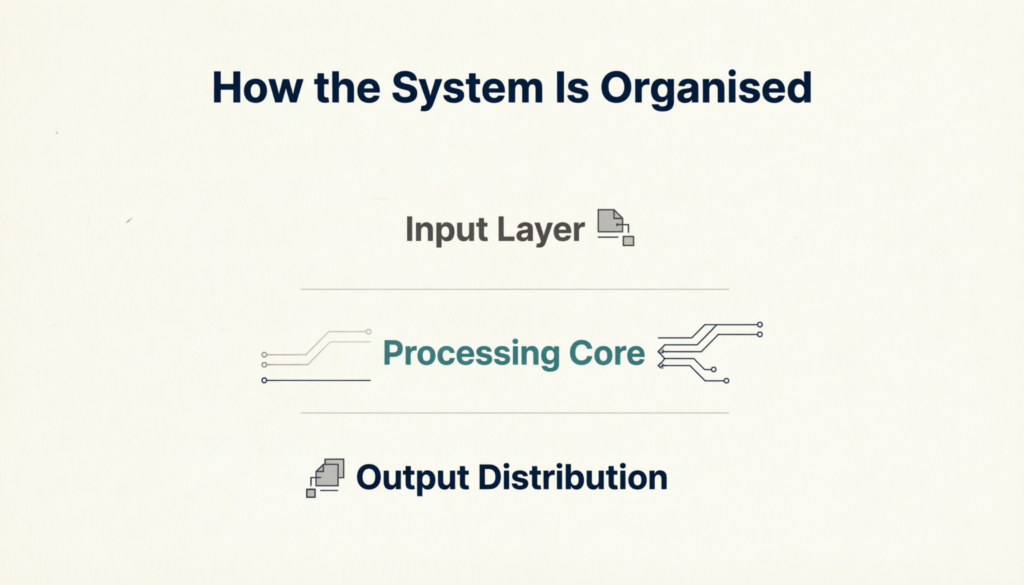
Most HR portals follow the same basic layout. There is a login page, a home screen often called a dashboard, and a set of sections reached from a menu. Each section handles one kind of task, such as attendance, leave, salary or personal details.
What makes it interesting is that the menu is not the same for everyone. The system uses role-based access, which means your job decides what you can see. A regular employee can open their own records. A team lead can additionally see requests from the people reporting to them. An HR administrator can reach company-wide records and settings. This design protects privacy, because your salary slip is not floating around where your teammates can browse it, and it protects accuracy, because only trusted people can edit important information.
Underneath, the sections are linked. A day marked as leave is automatically not marked as absent. Hours recorded in attendance feed into salary calculation. A change to your bank details in your profile will be used the next time salary is processed. These quiet connections are what turn a pile of separate forms into a working system.
What You Can Usually Do Inside
Look after your own details
The profile area is where your name, contact number, address and emergency contact usually live. It sounds dull, but it matters. If your phone number is outdated, you may miss an urgent call. If your bank details are wrong, your salary may land late. Most portals let you request changes, and some let you edit certain fields directly. Make a habit of glancing at your profile whenever life changes, like a new address or a new number.
Keep track of your working time
The attendance section shows the days and hours the system has recorded for you. Think of it as a mirror. If the mirror shows something wrong, such as a missing day or a late mark on a day you were on time, it is far easier to fix it this week than three months from now. Reporting small mismatches early saves everyone from a messy correction later.
Ask for time off
Leave requests are the feature most staff touch first. You choose the type of leave, pick the dates, add a note and send it. Your manager receives it and decides. You can watch the status change from pending to approved, and your balance adjusts accordingly. Compared with printed forms and signatures, it is faster and leaves a clear trail, which protects both you and your manager if memories differ later.
Read your payslip properly
Payslips show how your pay is built. Usually there is a base amount, extra allowances, amounts taken out for tax or other reasons, and the final figure that reaches your bank. Many people only look at the last number. A better habit is to read the whole slip once a month. If one line seems odd, ask the payroll team about that exact line. Specific questions get faster, clearer answers than “my salary looks wrong.”
Extra tools some companies add
Depending on the setup, you might also see sections for performance reviews, goal setting, hiring and induction. These are optional pieces. Where they exist, they help managers keep review conversations organised and give new joiners a consistent first few weeks.
Getting In: A Calm Walkthrough of Logging In
To sign in, you need three things: the official portal address from your employer, your username and your password. Your HR team or IT administrator normally gives you these on your first days. Open the address in your browser, type the username, then the password, and press the sign-in button. If your details are right, the dashboard appears within a few seconds.
Two points trip people up more than anything else. The first is the address. Always use the link your company supplied, and keep it bookmarked. Scammers love to copy login pages and wait for people to type their details into the wrong place. The second is registration. Many company portals do not have a “create account” button at all, because HR creates accounts for staff. If you cannot find one, nothing is broken. Simply ask HR to set you up.
When the Login Refuses to Cooperate

Everyone has typed a password with total confidence and been rejected. Before assuming the worst, check the small things. Is caps lock on? Did you type a zero instead of the letter O? Did a stray space sneak in when you pasted the password from an email? These tiny slips cause a surprising share of login trouble.
If those checks fail, use the password recovery link. Some portals ask for your employee code and a captcha, the little puzzle that proves you are a person rather than a program, so keep your employee code nearby. Avoid guessing again and again, because many systems lock an account after several wrong tries as a safety step. If you are locked out, contact HR or IT rather than hammering the button.
Sometimes the fault is not on your side. The site could be under maintenance, or your connection might be slow. Wait a few minutes, try another browser, and ask a coworker whether they can get in. If they cannot either, report it. One clear message to IT from several people is usually fixed faster than silence.
Why HR Teams Value a System Like This
For an HR professional, time is the main currency. A big share of HR work is repetition: updating records, answering the same leave question, preparing monthly numbers. A shared platform takes much of that load, which leaves room for the work only a person can do, like handling a tough conversation, improving the hiring process or understanding why a good employee decided to leave.
There is also the matter of seeing patterns. When data sits in one place, trends become visible. Maybe one department has much more absence than the rest. Maybe leave requests spike just before long weekends and the team is understaffed every time. Spotting this in scattered spreadsheets is nearly impossible. In an organised system, it can take a few clicks, and the company can plan around it.
Finally, fairness. When every request follows the same route and every pay figure comes from the same records, people are treated by the same rules. That cuts down on arguments and favouritism, and it gives employees quiet confidence that the process is not bending for anyone.
The Money Side: Payroll Without the Panic
Payroll deserves its own attention, because it is where mistakes hurt most. A late or wrong salary affects rent, school fees and family plans. When attendance, leave and salary rules live in one platform, the chance of a mismatch falls sharply, because the numbers do not have to be rewritten by hand each month.
That said, software is not a substitute for care. If rules are entered wrongly, the system will repeat the wrong rule perfectly every month. HR teams do well to double-check settings after any change in policy, and employees do well to read their payslips so odd entries are caught early.
Keeping Your Account Safe
Because an HR portal holds addresses, bank details and salary data, it is a juicy target. The most common attack is not clever hacking but trickery. A message arrives that looks like it is from HR, saying your account needs urgent verification, with a link to click. That is phishing, and it works because it creates panic.
A few habits shut most of these doors. Never click a link in an unexpected message to log in. Type or open your saved bookmark instead. Choose a long password that you do not use anywhere else. Do not share it, even with a friendly colleague. And if you ever use a shared computer, sign out and close the browser before walking away. These steps take seconds and protect some of the most private information you have.
Common Hurdles and How to Handle Them
New systems always bring a bumpy first month. People who grew up on paper forms may feel lost, and a ten-minute walkthrough from HR can prevent weeks of confusion. Another hurdle is the quality of the starting data. If old records contain mistakes when they are moved in, the system will display those mistakes neatly. A cleanup before launch is worth the effort.
Then there is habit. A platform only helps if people actually use it. If managers keep approving leave over chat messages and ignore the portal, records fall out of date and trust in the system fades. The fix is simple but needs leadership: pick one official route for each task and stick to it.
Small Habits That Make a Big Difference
If you are an employee, set a gentle routine. Glance at your attendance once a week, read your payslip once a month and update your details when life changes. Five minutes here and there prevents most of the headaches described above.
If you work in HR, think of adoption as part of the job. Show people the two or three features they will use most, give them a clear contact for help and revisit the settings a couple of times a year. Companies change, and leave types, approval steps and access rules should change with them.
Quick Answers to Questions People Ask
Can small businesses use HRMS Globex or similar tools?
Yes. Any business with staff, attendance and salaries can gain from central records. Bigger firms feel the pain sooner, but a team of twenty wastes plenty of hours on spreadsheets too.
Can I register myself?
Usually not. Accounts are typically created by HR or an administrator, who then shares your login details.
Why does my coworker see more menu options than I do?
Because menus follow roles and company settings. A manager or HR admin naturally sees more than a regular employee.
What if my payslip looks wrong?
Contact payroll or HR and mention the exact line that seems off. A specific question gets a quicker, clearer answer.
Closing Thoughts
HRMS Globex, like any good HR platform, is really about removing friction from ordinary working life. It gathers records, attendance, leave and salary into one place, so employees get answers without chasing and HR teams get time back for people-focused work. The exact tools you see will depend on your employer’s choices, but the benefits are the same everywhere: fewer errors, clearer records and a fairer process.
Learn the few sections you will use most, guard your login like you guard your bank card and speak up when something looks off. Do that, and the portal stops being a chore and becomes what it was meant to be: a quiet helper in the background of your working week.