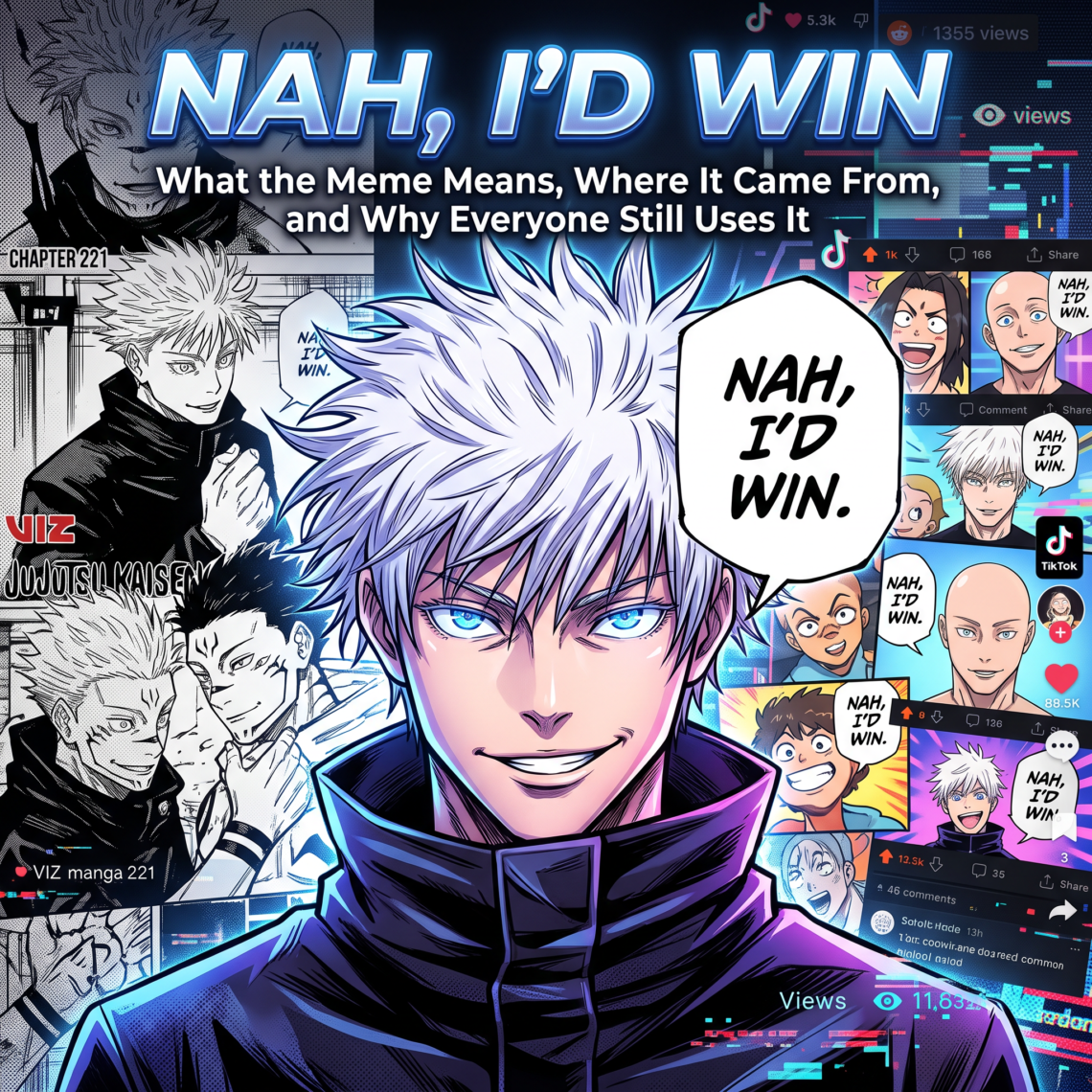
If you have spent any time on TikTok, Reddit, X, or Discord in the last few years, you have probably seen the words “nah id win” pop up under a picture, a video, or a joke that had nothing to do with fighting. Maybe someone posted it under a photo of their cat. Maybe a friend typed it after you asked if they could beat a video game boss on the first try. It looks simple, but there is a funny story behind it, and knowing that story makes the joke work even better.
This guide explains what “nah id win” means, where it came from, why it blew up, and how you can use it without sounding awkward.
What Does “Nah Id Win” Mean?
At its simplest, “nah id win” is a short, cocky reply. Someone asks, “Could you lose?” and the answer is, “Nah, I’d win.” The person saying it is totally sure of themselves and does not even need to think about it.
Most people type it as “nah id win” without the apostrophe, because that is how people type fast online. The proper spelling is “Nah, I’d win,” where “I’d” is a short way of saying “I would.” So the full meaning is “No, I would win.”
Today the phrase has two layers. The first layer is plain confidence. You say it when you want to show that you believe in yourself, usually as a joke. The second layer is irony. Since the meme became famous, people also use it when someone is being far too sure of themselves right before things go wrong. The phrase works as a boast and as a punchline at the same time, which is a big reason it lasted.
Where Did “Nah Id Win” Come From?
The phrase comes from Jujutsu Kaisen, a hit Japanese manga written and drawn by Gege Akutami. The story began in October 2020 and later became a popular anime too. It follows young sorcerers who fight dangerous curses, and one of its most loved characters is Satoru Gojo, a teacher who is known as the strongest sorcerer alive.
Gojo is the kind of character who is funny, relaxed, and almost impossible to beat. He wears a blindfold, jokes around with his students, and acts like nothing can touch him. Most of the time, he is right.
The famous line appears in Chapter 221 of the manga, in 2023. Gojo is about to fight Sukuna, the most feared villain in the story, and someone asks him whether he could lose. Gojo gives a flat, calm answer: “Nah, I’d win.”
That one panel is the entire origin of the meme. It is only a few words, but the way Gojo says it is what made it so easy to remember. He is not nervous. He is not bragging in a loud way. To him, it is simply a fact, and he says it that way.
The Translation Mix-Up That Started the Fun

Here is the part many people do not know. The meme exists partly because of a translation argument.
When a new manga chapter comes out in Japan, fans around the world want to read it right away. Back then, fan translation groups, often called scanlation groups, rushed out English versions within hours. Each group translated Gojo’s last line a little differently. According to reports, one version said “No,” another said “I will win,” and a third said “Nah, I’d win.”
Fans noticed the differences almost at once. A thread on X compared the three versions side by side, and people started arguing about which one felt right. Many fans liked “Nah, I’d win” the most because it sounded like Gojo. It was casual, a little rude, and full of confidence.
Then the official publisher, VIZ Media, changed its own translation from “No” to “Nah, I’d win.” Many readers believed this was a smart choice because it matched an earlier moment in the story. In Chapter 3, Gojo had already made a very sure statement about winning, so the new line worked like a callback to that scene. Once the official version matched the fan favorite, the line spread everywhere.
The slightly rough, spoken style helped too. A very polished sentence would not have been as fun to copy. “Nah, I’d win” sounds like something a real person would say to a friend, and that made it easy for anyone to use.
Why the Meme Became So Big
A good meme needs a few things. It should be short, funny, and easy to change. “Nah id win” ticks all three boxes, but there is more to the story.
The first reason is the template. The original panel shows Gojo with a calm face and the speech bubble. Fans quickly learned they could swap his face with any other character, a cartoon animal, a real animal, or even a random object. Some people replaced Gojo with a speech bubble only. Others edited the words onto photos so that cracks in a wall or moss on a path looked like the sentence. Because the format is so easy to remix, it kept getting fresh jokes.
The second reason is TikTok. Edits and video compilations of the line spread quickly there, and a stylized video from one creator reportedly earned tens of thousands of likes in a single day. When short videos and a strong catchphrase meet, a meme can reach millions of people very fast.
The third reason is the story that came next. Gojo’s confidence was a big part of his charm, so fans were shocked when the fight with Sukuna did not go the way many expected. Later chapters, with Chapter 236 often named by fans, delivered a heavy blow to Gojo’s fans. After that, “Nah, I’d win” took on a sadder and funnier second meaning. The man who said he would win did not win, and fans started joking about it in a way that mixed grief with humor. Some communities even began calling themselves “Lobotomy Kaisen” because of how hard they were trying not to accept what happened. The line became a symbol of hope that refused to die.
That mix of cool confidence and painful irony is what keeps the meme alive. It gives people a reason to laugh, a reason to feel something, and a reason to share it.
How People Use “Nah Id Win” Today
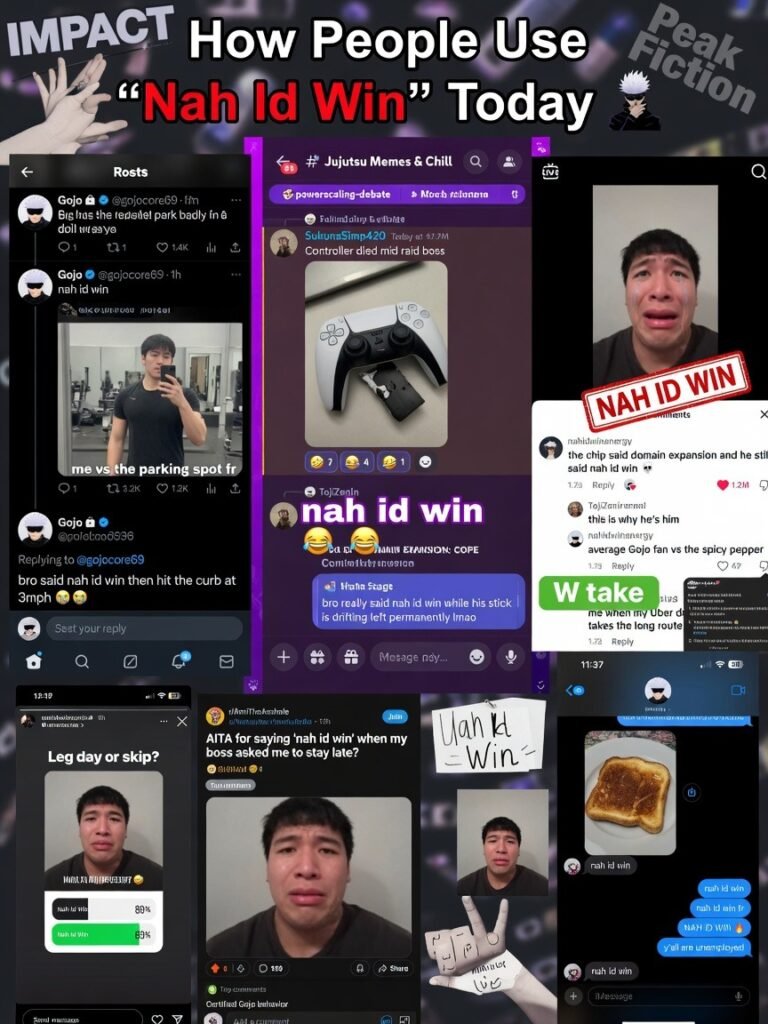
You do not need to have read a single page of Jujutsu Kaisen to use the phrase. Most people do not. Over time it grew into a general internet saying, and you can find it in many places.
One common use is the simple boast. A friend asks if you could finish a hard level, win an argument, or beat them in a game of basketball, and you answer, “Nah, I’d win.” It works best when it is clearly a joke, because it shows you are playing along.
Another use is the “before and after” joke. Someone posts a confident statement, then adds a picture of the exact opposite result. For example, a person might say they will wake up early tomorrow, then show a photo of themselves asleep at noon, with “nah id win” as the caption. The humor comes from the gap between what was promised and what happened. This is closer to how the meme feels today, and people who know the story of Gojo often enjoy it the most.
A third use is the image edit. People paste the speech bubble onto pets, celebrities, movie characters, or sports stars. A sports fan might put the phrase on a photo of their favorite player before a big match. A gamer might use it on a character who is about to face an impossible boss. The joke is the same each time: someone looks way too calm for the danger in front of them.
You will also see it in comments. When someone online asks a “could you beat this?” question, a fast “nah id win” reply is a friendly way to join in. It has become a kind of shared shorthand, and it tells others that you get the joke.
The Sister Meme: “Nah, I’m You”
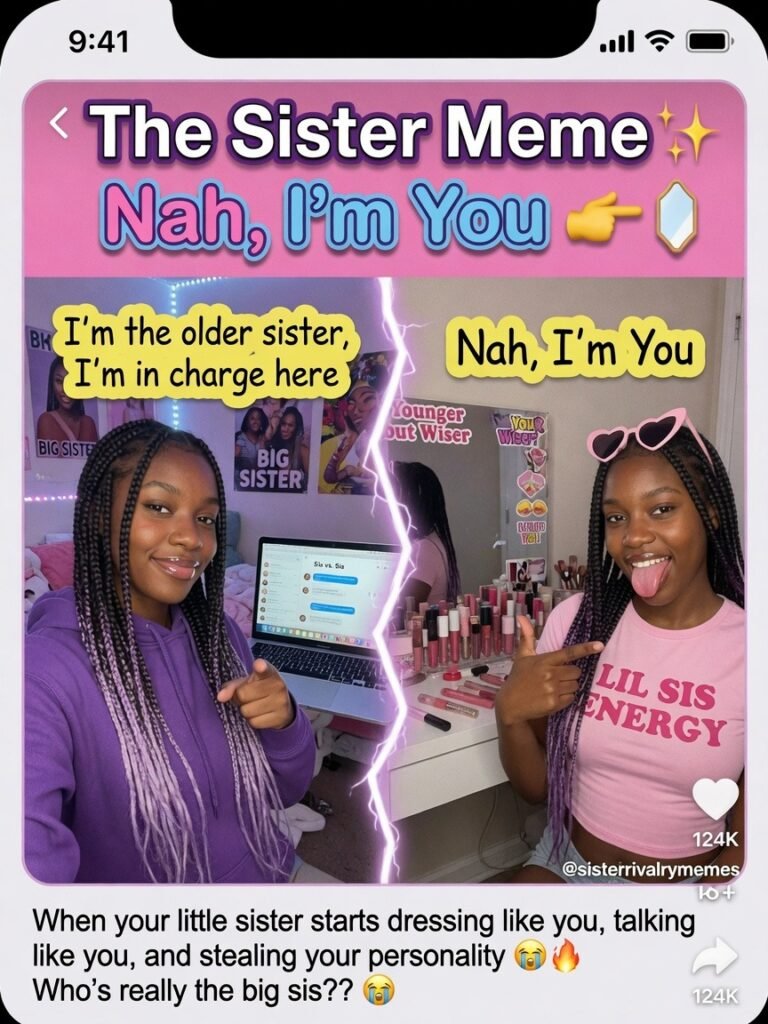
If you spend enough time around this meme, you will probably meet its cousin, “Nah, I’m you.” It also comes from the final stretch of the Gojo and Sukuna story, and it is another line from their conversation.
The two phrases feel different. “Nah, I’d win” is about pride and overconfidence. “Nah, I’m you” is more about respect between two strong rivals, who see a bit of themselves in each other. Fans use the second one when they want to say that they relate to someone, or that they are just like the person being talked about. Even so, both lines share the same quick, casual “Nah” at the start, and both became popular for the same reasons.
Is “Nah Id Win” Still Popular?
Memes usually fade in a few weeks, so it is fair to ask whether this one is still around. The answer is yes. Years after it first appeared, you can still scroll through Jujutsu Kaisen posts and find the phrase in the comments. Writers who follow internet culture have called it one of the longest-lasting memes to come out of anime fandom.
Part of its staying power comes from the fact that it works at two levels. A brand new viewer can enjoy the confidence joke right away. A longtime fan can enjoy the sad irony underneath. Because it fits so many situations, it never feels old in the same way as a joke tied to one news event.
It also helps that the phrase is not locked to one fandom. You can say it about a football match, a cooking contest, a school exam, or a game of cards. As long as there is a challenge and someone feels brave about it, the line still fits.
Tips for Using the Phrase Well
Like any joke, “nah id win” works best when it is used at the right time. Say it when the situation is playful and everyone knows you are kidding. If you use it in a serious talk, it can sound rude, and it might come across as real bragging instead of a joke.
It also helps to keep it short. The power of the line is in how little it says. If you add a long explanation after it, the punch is gone. Just type the words, post the image, and let people enjoy it.
If you are making your own meme, think about contrast. The funniest versions place the phrase next to a situation where the person has no real chance, or where the result is already clear. A tiny dog facing a giant sofa, a student looking at a huge pile of homework, or a person facing a plate of very spicy food all work well, because the calm confidence is so silly.
Finally, if you are using it with a group of fans, be kind about the story. Many people feel strongly about what happened to Gojo, and some may not have read that far yet. A quick spoiler warning goes a long way, and it shows you care about the community.
Read More: Invoice Simple: The Easiest Way to Create and Send Invoices for Your Small Busines
Final Thoughts
“Nah id win” started as one small panel in a manga, but it grew into one of the best-known catchphrases on the internet. It began with a translation mix-up, gained fans because it sounded so cool and natural, and then took on a new meaning after the story took a painful turn. Today it works as a boast, a joke, a tribute, and a way to laugh at our own overconfidence.
The next time you see the phrase in a comment section or on a funny edit, you will know exactly where it came from and why it still makes people smile. And if someone asks whether you could lose at something, you now have the perfect answer.