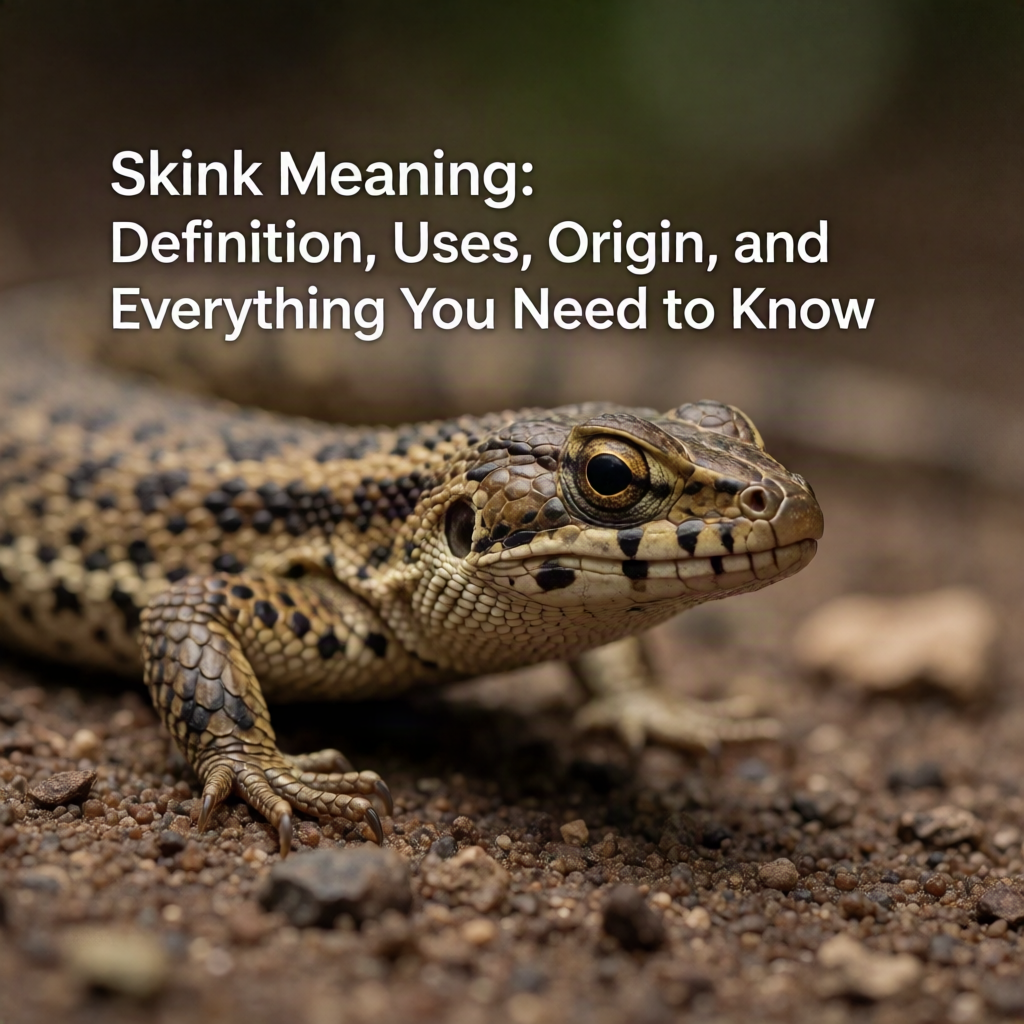
If you have searched for skink meaning, chances are you came across the word while reading a book, watching a nature documentary, or solving a crossword puzzle. Although the word is not used in everyday conversations as often as many animal names, it has a clear meaning that is worth understanding.
In modern English, a skink is a type of small to medium-sized lizard that belongs to one of the largest families of lizards in the world. These reptiles are known for their smooth, shiny scales, slender bodies, and quick movements. Some species have very short legs, while others have almost no visible legs, making them look similar to snakes.
Beyond its dictionary definition, the word “skink” also has an interesting history, scientific importance, and cultural value. This guide explains the meaning of skink in simple language while exploring where the word came from, how it is used, and why these reptiles are so unique.
What Does Skink Mean?
The most common meaning of skink is:
A skink is a member of a large family of lizards known for smooth scales, long bodies, and fast movement.
Unlike many reptiles that have rough or spiky skin, skinks have glossy scales that give them a polished appearance. Their bodies are usually narrow, and many species have relatively small legs. This body shape helps them move quickly through grass, leaves, sand, and loose soil.
There are more than 1,500 known species of skinks living across the world. Because of this large number, they are considered one of the biggest lizard families on Earth.
Simple Definition of Skink
In everyday English, you can understand the word like this:
A skink is a small reptile that looks similar to a lizard but usually has smoother skin, a longer body, and shorter legs. Many people mistake skinks for snakes because of their body shape, but they are true lizards.
The word refers to the animal itself rather than describing a person’s behavior or personality.
Pronunciation of Skink
The word skink is pronounced as:
/skɪŋk/
It sounds similar to:
“skink” (rhyming with “think” but starting with “sk”)
The pronunciation is short and straightforward, making it easy to remember.
Origin of the Word Skink
The word has been part of the English language for many centuries. It comes through Latin and Greek roots that were used to describe certain kinds of lizards.
As natural science developed, the name became associated with a large family of reptiles found across different continents. Today, the scientific family is known as Scincidae, which includes hundreds of different skink species.
Although the spelling has remained nearly the same over time, our understanding of skinks has grown greatly through scientific research.
What Does a Skink Look Like?
One reason people search for the meaning of skink is because they are unsure how to identify one.
Most skinks share several physical features. They have smooth scales that reflect light, giving them a shiny appearance. Their bodies are usually longer than many other common lizards, and their heads blend smoothly into the neck without sharp angles.
Their legs are often much shorter than those of geckos or iguanas. In some species, the legs are so tiny that they are difficult to notice at first glance. Certain skinks even appear almost legless, leading people to confuse them with snakes.
Despite these similarities, skinks have movable eyelids and external ear openings, features that help distinguish them from snakes.
Where Are Skinks Found?
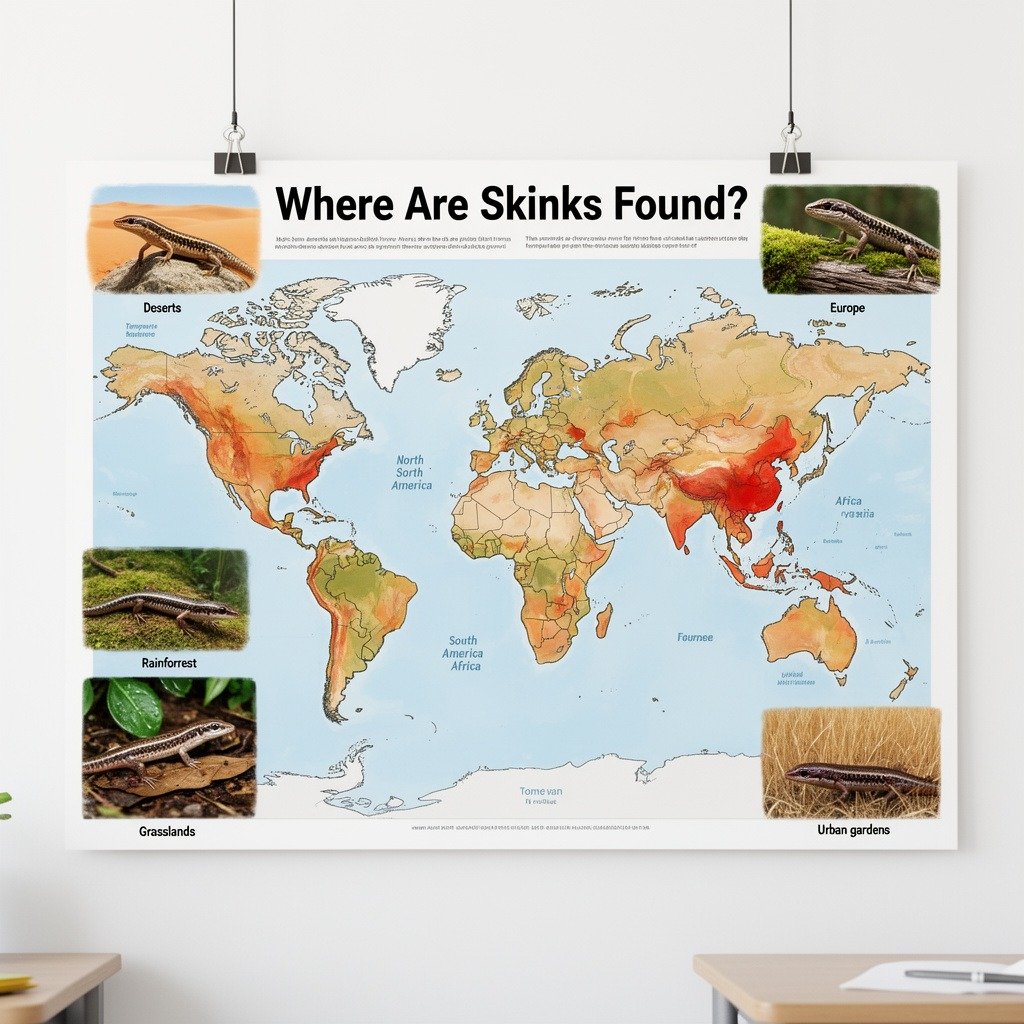
Skinks live in many different parts of the world. They are especially common in warm climates, although some species can survive in cooler environments.
These reptiles are found throughout Africa, Asia, Australia, Europe, and the Americas. Australia is home to an especially large number of skink species, making it one of the most important regions for skink diversity.
Different species have adapted to forests, deserts, grasslands, mountains, wetlands, and even suburban gardens. Their ability to live in many environments has helped them become one of the most successful groups of lizards.
Why Are Skinks Important?
Understanding the skink meaning is only the beginning. These animals also play an important role in nature.
Skinks feed on insects, spiders, worms, and other small creatures. By eating these animals, they help keep insect populations under control.
At the same time, skinks serve as food for birds, snakes, mammals, and larger reptiles. This makes them an important part of many food chains.
Because they are sensitive to changes in their environment, scientists often study skinks to learn about habitat health and environmental conditions.
Different Types of Skinks
Although all skinks belong to the same family, they vary greatly in size, color, and behavior.
Some species measure only a few inches long, while others can grow well over a foot in length.
Certain skinks have bright blue tails that distract predators. Others have striped bodies that help them blend into grass or forest floors. Some live mostly underground, while others spend much of their time climbing rocks or searching through fallen leaves.
This wide variety explains why there are so many different skink species around the world.
Can Skinks Lose Their Tails?
One of the most fascinating facts about skinks is their ability to escape danger.
When attacked by a predator, many skinks can intentionally drop their tails. The detached tail continues moving for a short time, distracting the predator while the skink runs away.
Later, the tail slowly grows back. Although the new tail may not look exactly like the original one, this remarkable ability greatly increases the animal’s chance of survival.
This defense method is shared by several types of lizards, but it is especially well known among skinks.
Are Skinks Dangerous?
Many people wonder whether skinks are harmful.
In general, skinks are harmless to humans. They are shy animals that usually avoid people whenever possible.
Most skinks are too small to cause injury. If handled roughly, they may try to bite, but their bites are generally mild and intended only for self-defense.
They are not venomous and rarely show aggressive behavior toward humans.
Because they help control insects, many homeowners actually consider skinks beneficial visitors in gardens.
What Do Skinks Eat?
The diet of a skink depends on its species and habitat.
Most skinks mainly eat insects, beetles, ants, spiders, caterpillars, worms, and other small invertebrates. Larger species may occasionally consume snails, tiny frogs, eggs, or small reptiles.
Some tropical species also eat fruits, flowers, or plant material alongside insects.
Their flexible diet allows them to survive in many different environments.
Skink Meaning in Dictionaries
Major English dictionaries describe a skink in very similar ways.
They define it as a lizard belonging to a large family recognized for smooth scales, elongated bodies, and relatively short legs. These definitions focus on the reptile’s physical appearance and scientific classification while keeping the explanation simple enough for everyday readers.
Although wording may differ slightly between dictionaries, the overall meaning remains consistent.
Example Sentences Using Skink
Learning through examples makes new vocabulary easier to remember.
The children watched a small skink disappear beneath the rocks.
A shiny brown skink ran across the garden before anyone could take a picture.
The wildlife guide explained that the animal was a skink rather than a snake.
Researchers discovered several skink species living in the rainforest.
After reading about reptiles, she finally understood the meaning of the word skink.
Skink vs Lizard
People sometimes ask whether a skink and a lizard are the same thing.
The answer is both yes and no.
Every skink is a lizard, but not every lizard is a skink.
“Lizard” is a broad term covering thousands of reptile species. “Skink” refers to one specific family within that larger group.
This is similar to how every tiger is a cat, but not every cat is a tiger.
Common Misunderstandings About Skinks
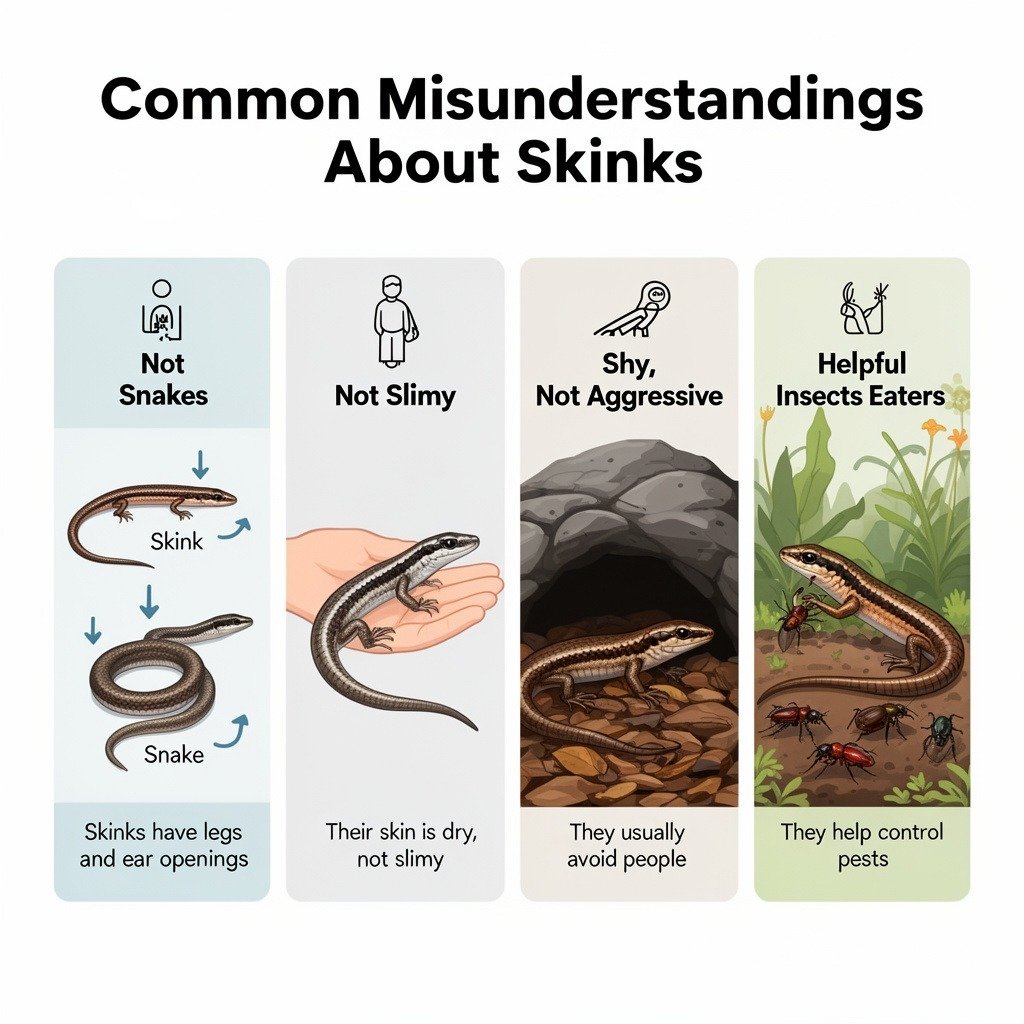
Because of their appearance, skinks are often mistaken for snakes. Their long bodies and short legs can create this confusion, especially when they move quickly through grass.
Others believe skinks are poisonous, but this is not true for the vast majority of species.
Some people also think all skinks look alike. In reality, their colors, sizes, habitats, and behaviors vary greatly depending on the species.
Learning the true meaning of skink helps clear up these common misunderstandings.
Interesting Facts About Skinks
Skinks are among the most widespread lizards in the world, living on nearly every continent except Antarctica.
Many species are active during the day and spend their time searching for insects.
Some skinks give birth to live young, while others lay eggs, showing remarkable diversity within the family.
Their smooth scales reduce friction as they move through vegetation or loose soil, helping them travel efficiently.
Scientists continue discovering new skink species, proving that there is still much to learn about these fascinating reptiles.
Why People Search for “Skink Meaning”
There are several reasons why this keyword is searched online.
Students often encounter the word in science lessons or reading assignments. Crossword puzzle fans may need the definition to solve clues. Nature lovers hear the term in wildlife documentaries, while travelers may see skinks in gardens, parks, or forests and become curious about them.
Since the word is less common than names like “snake” or “frog,” many people search for its exact meaning before learning more about the animal itself.
Frequently Asked Questions
What is the meaning of skink?
A skink is a small to medium-sized lizard with smooth scales, a long body, and usually short legs. It belongs to the reptile family Scincidae.
Is a skink a snake?
No. A skink is a lizard. Although some species look similar to snakes, they have characteristics that clearly identify them as lizards.
Are skinks friendly?
Skinks are generally shy rather than friendly. They usually avoid humans and prefer hiding when disturbed.
Can skinks live in gardens?
Yes. Many skinks live in gardens because they find insects, shelter, and warm places to rest. They are often helpful because they eat insect pests.
Are skinks good for the environment?
Yes. Skinks help maintain healthy ecosystems by controlling insect populations and serving as food for larger animals.
Read More: FUTGG: The Complete Guide to the Ultimate EA Sports FC Companion Platform
Final Thoughts
The skink meaning is simple once you understand it. A skink is a member of one of the world’s largest families of lizards, recognized by its smooth scales, long body, and quick movements. Although the word may seem unfamiliar at first, it refers to a fascinating group of reptiles found across many parts of the globe.
Beyond the dictionary definition, skinks are valuable animals that support healthy ecosystems, help control insects, and demonstrate the incredible diversity of reptile life. Whether you encountered the word in a dictionary, a book, or while observing wildlife, knowing its meaning gives you a better appreciation of these unique and often misunderstood creatures.