Writing a check may seem old-fashioned today, but it is still an important financial skill. Many landlords, businesses, schools, government offices, and service providers continue to accept checks as a secure payment method. Whether you are paying rent, making a donation, or sending money to someone, knowing how to write a check correctly can help you avoid mistakes and protect your finances.
If you have never written a check before, don’t worry. The process is much easier than it looks. This guide explains every part of a check in simple English and provides a clear sample how to write a check that anyone can follow. By the end of this article, you’ll feel confident filling out a check correctly every time.
What Is a Check?
A check is a written order that tells your bank to pay a specific amount of money from your bank account to another person or business. Instead of handing over cash, you write the payment details on the check, sign it, and give it to the person receiving the money.
Once they deposit or cash the check, the money is transferred from your checking account to theirs.
Although online banking and digital payment apps have become popular, checks remain useful because they provide a paper record of payments and are accepted in many situations where electronic payments may not be available.
Why Do People Still Use Checks?
Many people assume checks are no longer necessary, but they still have practical uses. Some landlords prefer rent payments by check because they create a clear payment history. Schools often accept checks for tuition or activity fees. Government agencies, charities, insurance companies, and certain businesses also continue to accept checks.
Checks can also be safer than carrying large amounts of cash. If a check is lost before it is cashed, you can usually request a stop payment through your bank.
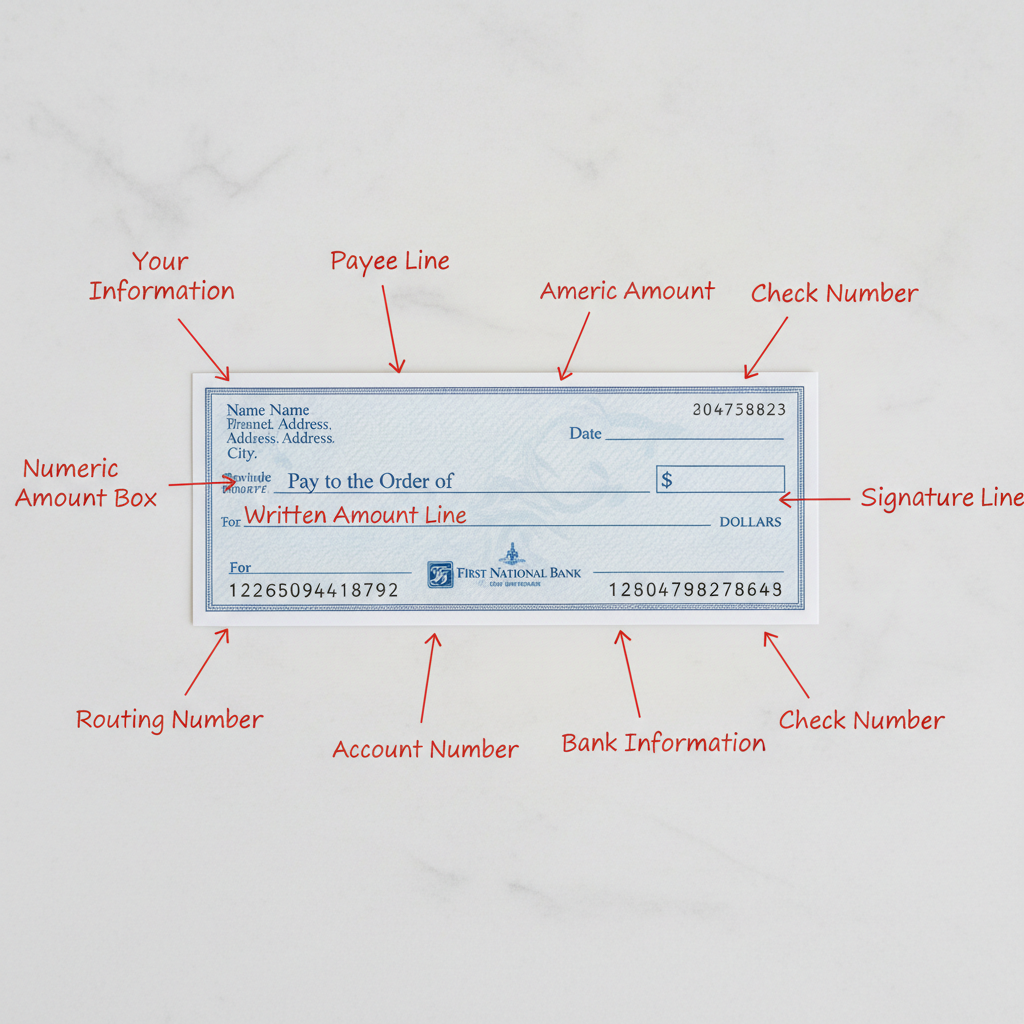
Understanding the Parts of a Check
Before learning how to write one, it’s helpful to understand each section of a standard check.
At the top right corner, you’ll find the date line. This is where you write the current date.
Below the date is the “Pay to the Order of” line. This is where you write the name of the person or company receiving the payment.
Next to the payee line is the small box where you write the payment amount using numbers.
Below that is a longer line where you write the same amount using words. This helps prevent fraud because the bank compares both amounts before processing the check.
Near the bottom left, there is a memo line. Although optional, this section helps explain the purpose of the payment, such as “July Rent,” “Electric Bill,” or “Birthday Gift.”
Finally, the bottom right corner contains the signature line. Your signature authorizes the bank to process the payment.
At the very bottom are the routing number, account number, and check number, which are printed by your bank.
Sample How to Write a Check
Let’s look at a complete example.
Imagine you are paying your landlord $850.75 for your monthly rent on August 6, 2026.
You would complete the check like this:
Date: August 6, 2026
Pay to the Order of: John Smith
Amount (Numbers): $850.75
Amount (Words): Eight hundred fifty dollars and 75/100
Memo: August Rent
Signature: Your normal bank signature
This example shows exactly how each section should be completed. Always ensure the written amount matches the number written in the amount box.
Step 1: Write the Date
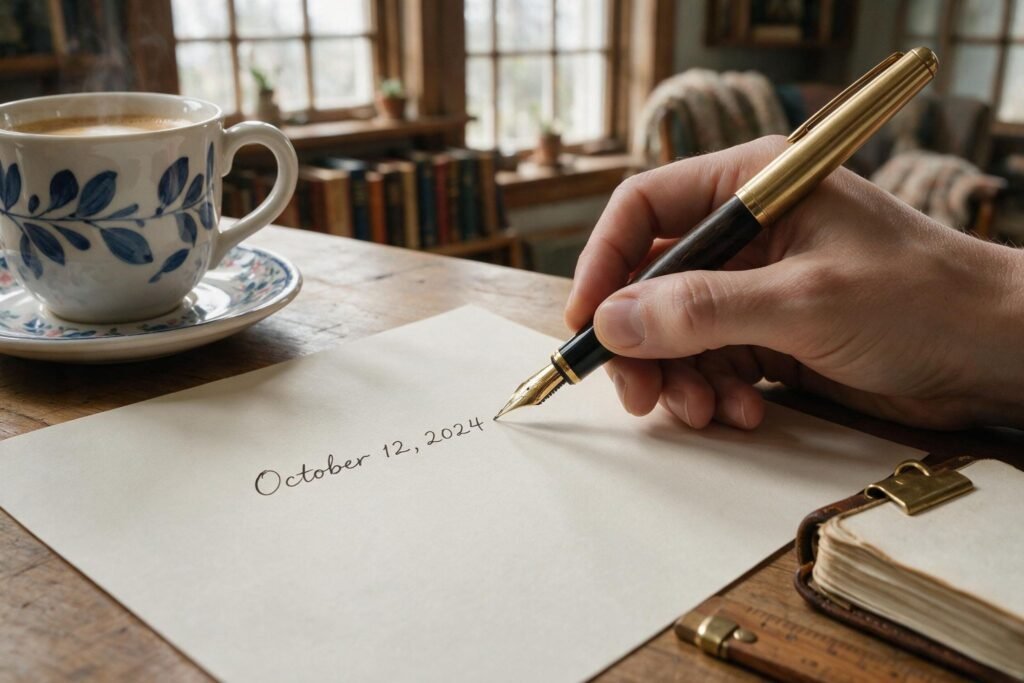
The first step is writing today’s date in the upper-right corner.
You can write it in different formats, such as:
August 6, 2026
08/06/2026
6 August 2026
Using the correct date helps the bank know when the check was written. It also helps both you and the recipient keep accurate financial records.
Some people write a future date, known as post-dating a check. However, banks may still process the check before that date depending on their policies, so it’s usually best to write the current date unless you’ve agreed otherwise with the recipient.
Step 2: Write the Recipient’s Name
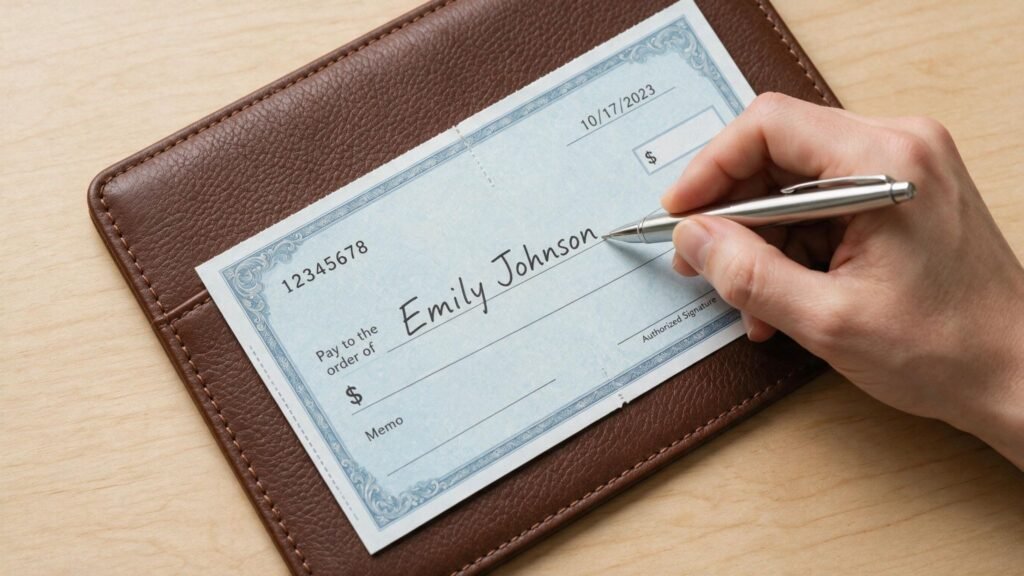
On the line labeled “Pay to the Order of,” carefully write the full name of the person or business receiving the payment.
For example:
John Smith
ABC Property Management
City Electric Company
Avoid using nicknames unless you know they are accepted by the recipient’s bank.
Always spell the name correctly because an incorrect name can delay the payment or create problems when the recipient tries to deposit the check.
Step 3: Write the Amount in Numbers
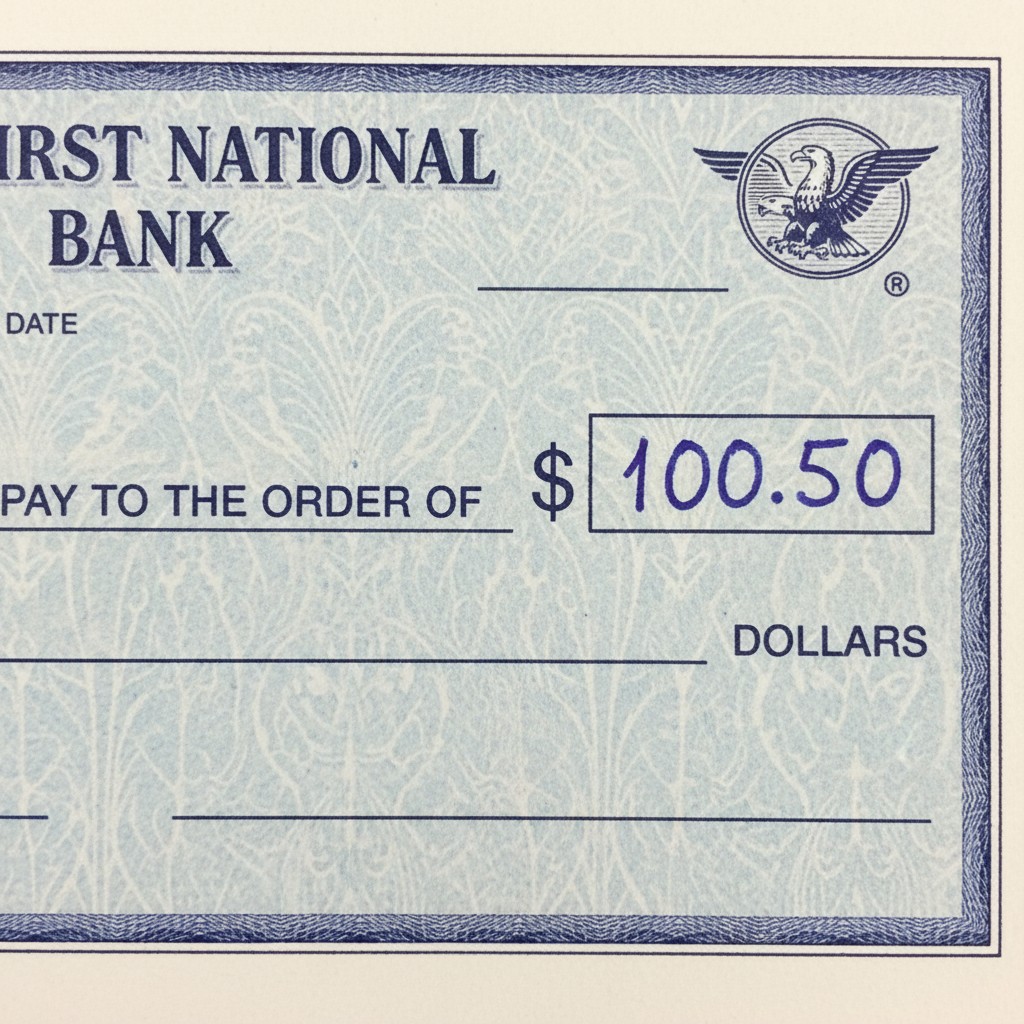
In the small box on the right side of the check, write the payment amount clearly using numbers.
Examples include:
$25.00
$150.50
$1,250.00
$850.75
Always begin writing close to the dollar sign so there isn’t extra space for someone to add more numbers later.
If there is unused space after the amount, drawing a line can help prevent fraud.
Step 4: Write the Amount in Words
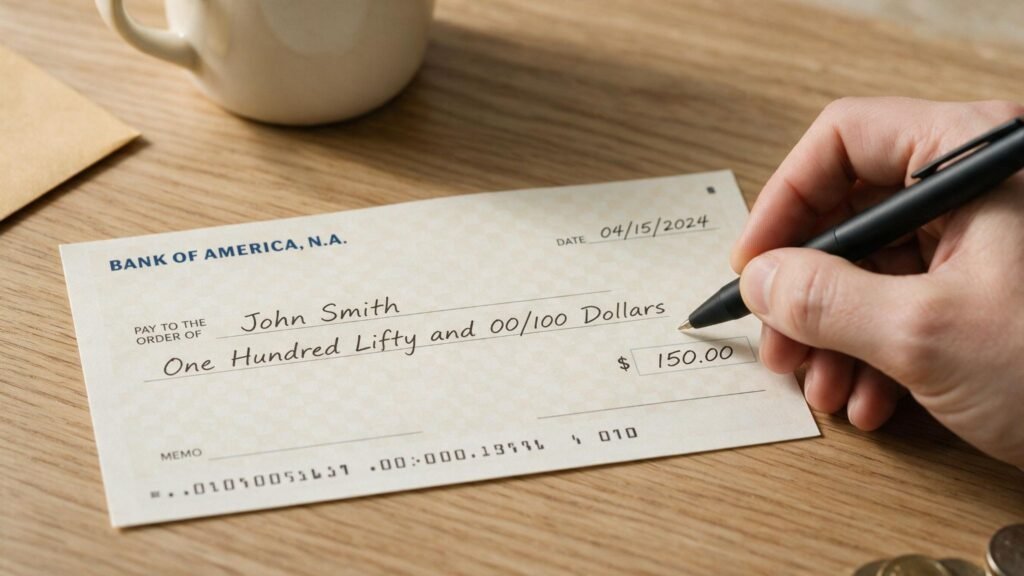
This step is extremely important because banks compare the written amount with the numerical amount.
For example:
Twenty-five dollars and 00/100
One hundred fifty dollars and 50/100
Eight hundred fifty dollars and 75/100
One thousand two hundred fifty dollars and 00/100
If the two amounts do not match, banks often use the written amount to determine the correct payment.
Writing clearly and neatly helps avoid misunderstandings.
Step 5: Fill in the Memo Line
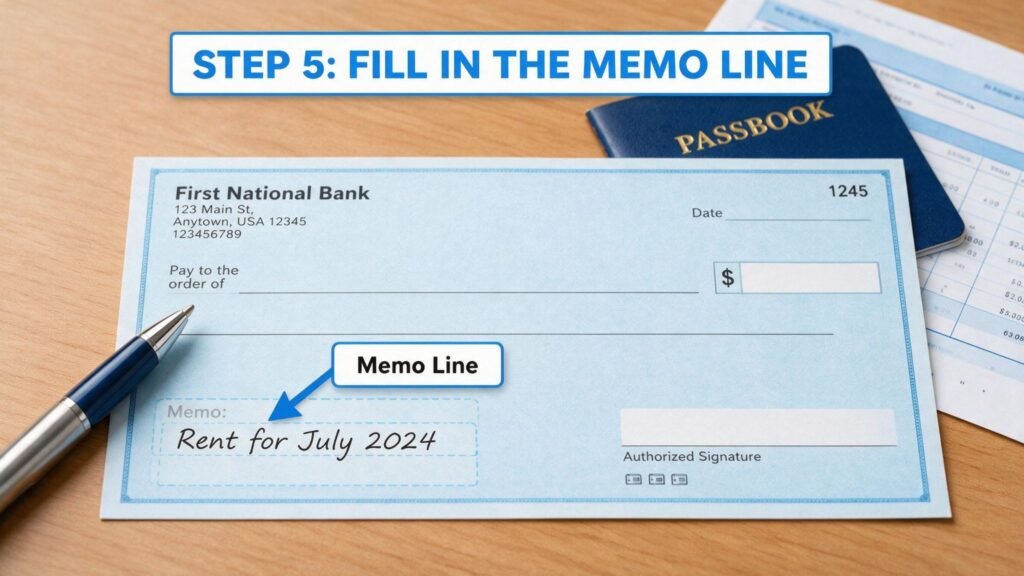
The memo section is optional, but it is very useful.
It tells both you and the recipient why the payment is being made.
Examples include:
Rent Payment
August Utilities
Car Insurance
Wedding Gift
Invoice #4521
Tuition Fee
Adding a memo makes it easier to track your expenses later when reviewing your bank statements.
Step 6: Sign the Check
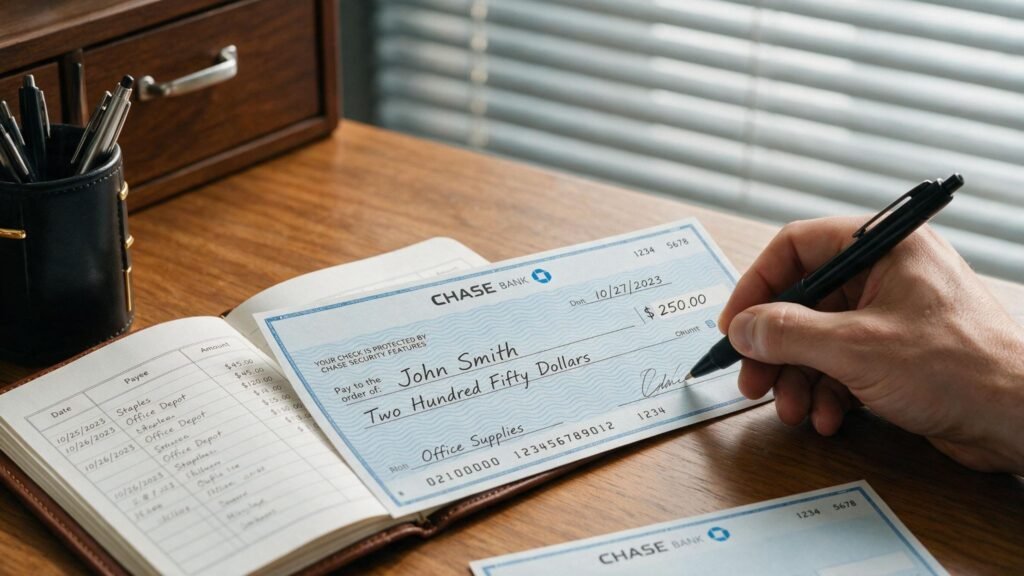
The signature is the most important part of the check.
Without your signature, the bank will usually refuse to process the payment.
Sign using the same signature your bank has on file. If your signature looks significantly different, your bank may request additional verification before approving the payment.
Never sign blank checks because someone else could fill in any amount and pay themselves.
How to Write Checks with Cents
Many people get confused when the payment includes cents instead of a whole dollar amount. Fortunately, the process is simple once you understand the format.
The amount in the number box should include both dollars and cents. For example, if you are paying $42.35, write 42.35 in the amount box.
On the amount line, write the dollar amount in words and the cents as a fraction over 100. For example, you would write:
Forty-two dollars and 35/100
Here are a few more examples:
- $15.50 becomes Fifteen dollars and 50/100
- $99.99 becomes Ninety-nine dollars and 99/100
- $250.05 becomes Two hundred fifty dollars and 05/100
Writing cents correctly helps ensure the bank processes the exact amount you intended.
How to Write Large Dollar Amounts
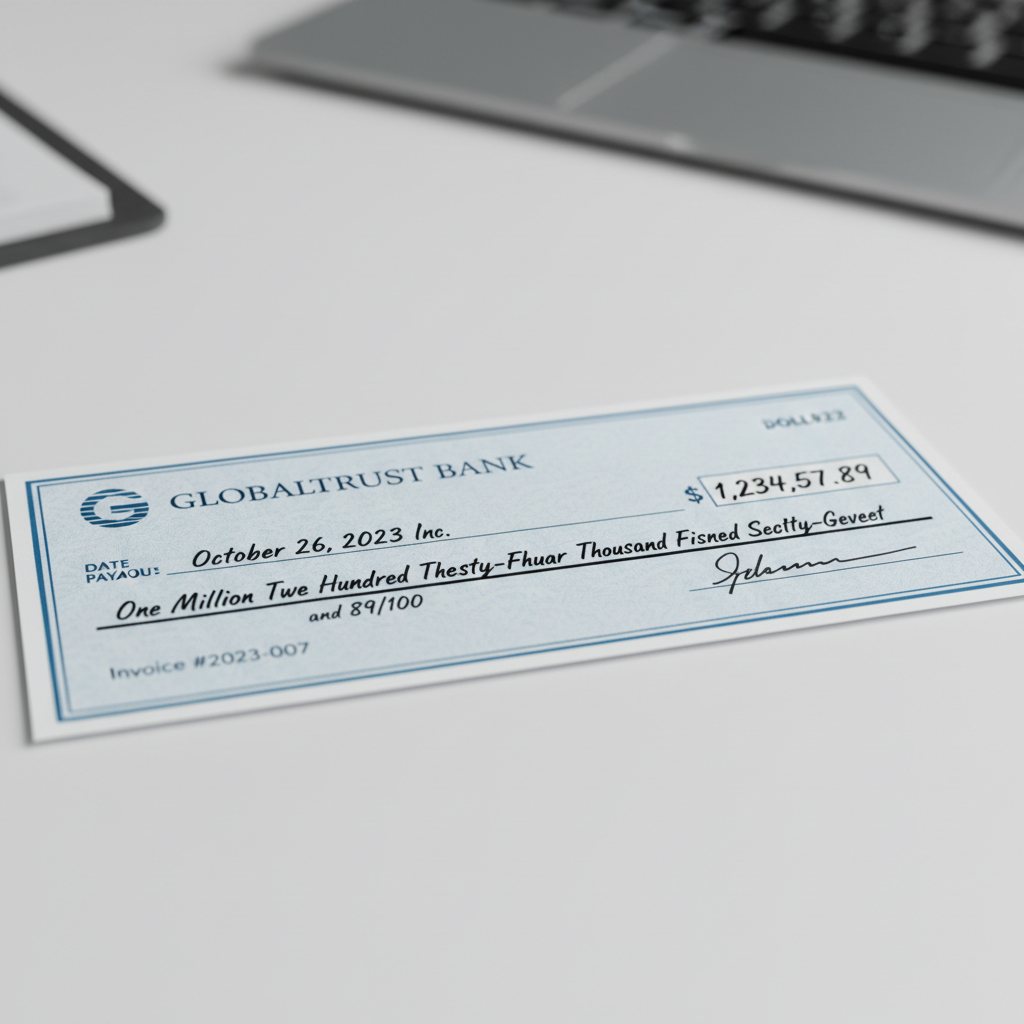
Checks are often used for larger payments, such as home repairs, tuition, or vehicle purchases. The same rules apply regardless of the amount.
For example:
$1,250.00
Write in words:
One thousand two hundred fifty dollars and 00/100
For a payment of $10,575.80, write:
Ten thousand five hundred seventy-five dollars and 80/100
Take your time when writing larger amounts. Even a small spelling or number mistake can delay processing.
Common Mistakes to Avoid
Writing a check is easy, but small errors can create unnecessary problems. One of the most common mistakes is writing different amounts in the number box and the written amount line. Since banks usually rely on the written amount, this mistake can result in the wrong payment.
Another common error is leaving empty spaces. Someone could add extra words or numbers after you have written the check. To reduce this risk, begin writing at the far left of each line and draw a line through any unused space.
Some people also forget to sign the check. An unsigned check is generally invalid and cannot be processed.
Using erasable ink or pencil is another mistake. Always use blue or black permanent ink so the information cannot be easily changed.
Finally, double-check the recipient’s name before handing over the check. A misspelled name may prevent the recipient from depositing it.
What Should You Do If You Make a Mistake?
Mistakes happen, especially if you do not write checks often.
If you accidentally write the wrong amount or misspell the recipient’s name, the safest solution is to void the check and start with a new one.
Avoid using correction fluid or heavily crossing out information, as many banks may reject altered checks.
If the mistake is very minor and your bank allows corrections, ask the recipient whether they are comfortable accepting it. However, writing a fresh check is usually the better option.
How to Void a Check
Sometimes you may need to cancel a check before giving it to someone. This is known as voiding a check.
To void a check, write the word “VOID” in large letters across the front of the check. Make the letters large enough that the check cannot be used for payment, but avoid covering the routing and account numbers at the bottom.
A voided check is commonly requested when setting up direct deposit or automatic bill payments because it provides your banking information without allowing anyone to cash the check.
Always record the voided check in your check register or banking records so the check number is accounted for.
How to Endorse a Check
If someone writes a check payable to you, you usually need to endorse it before depositing or cashing it.
The endorsement area is on the back of the check near the top.
For a standard deposit, simply sign your name as it appears on the front of the check.
Some banks may also ask you to write “For Deposit Only” along with your account number for added security, especially when using mobile check deposit.
Do not sign the back of the check until you are ready to deposit it. A signed check can be easier for someone else to misuse if it is lost.
How Long Is a Check Valid?
Most personal checks remain valid for about six months from the date they are written. After that, banks may consider them stale-dated and choose not to process them.
However, policies vary between banks, and some checks—such as cashier’s checks or government-issued checks—may follow different rules.
If you discover an old check that has not been cashed, contact the person who received it before issuing a replacement.
Tips for Keeping Your Checks Safe
Checks contain sensitive banking information, so it is important to handle them carefully.
Store your checkbook in a secure location where others cannot access it. If your checkbook is lost or stolen, contact your bank immediately so they can help protect your account.
Review your bank statements regularly to make sure every check listed is one you actually wrote. Monitoring your account helps you spot unauthorized transactions quickly.
Whenever possible, write neatly and clearly. Good handwriting reduces the chance of errors during processing.
Keeping a record of every check you write is also a smart habit. Whether you use a paper register or your bank’s mobile app, tracking payments helps you manage your finances more effectively.
Frequently Asked Questions
Can I write a check in blue or black ink?
Yes. Blue and black ink are both recommended because they are permanent and difficult to alter.
Is the memo line required?
No. The memo line is optional, but adding a note makes it easier to remember what the payment was for.
What happens if I write the wrong amount?
If the written amount and the numerical amount are different, banks often rely on the amount written in words. If you notice the mistake before giving the check to someone, void it and write a new one.
Can I write a check to myself?
Yes. You can write a check payable to yourself if you want to move money between accounts or withdraw cash from your bank.
Should I use pencil when writing a check?
No. Always use permanent blue or black ink to reduce the risk of fraud or accidental changes.
Read More: Skink Meaning: Definition, Uses, Origin, and Everything You Need to Know
Final Thoughts
Knowing sample how to write a check is still a valuable life skill, even in today’s digital world. While online banking and payment apps have become more common, checks continue to play an important role in personal and business finances.
By understanding each section of a check, writing the amount correctly in both numbers and words, signing it properly, and reviewing it before handing it over, you can avoid costly mistakes and ensure your payment is processed without delays.
Whether you’re paying rent, sending a gift, covering school fees, or handling business expenses, writing a check is a straightforward process once you know the basics. Keep this guide as a reference, and you’ll be able to complete a check accurately and confidently whenever the need arises.