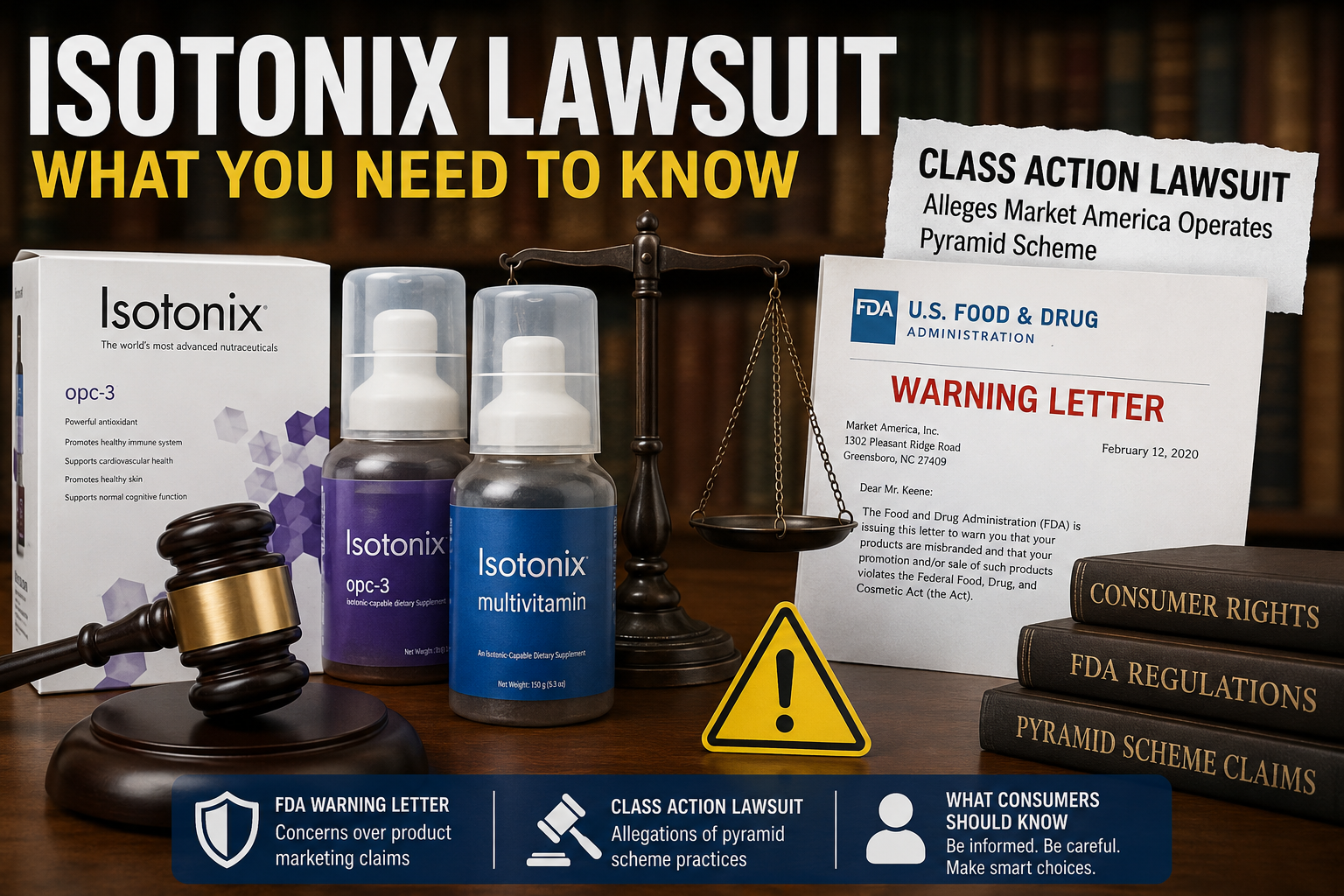
Dietary supplements have become one of the fastest-growing industries in the world. Millions of people use vitamins, minerals, and nutritional products every day to support their health. One well-known supplement brand is Isotonix, a product line sold by Market America. The brand has gained a loyal customer base because of its powdered supplements that are mixed with water before consumption.
However, alongside its popularity, the company has also faced legal and regulatory challenges. Many people searching online want to know about the Isotonix lawsuit, whether the products are safe, what the FDA warning letter was about, and how these legal issues may affect consumers.
This article explains the Isotonix lawsuit in simple language. It looks at the background of the legal claims, the FDA’s concerns, how Market America responded, and what customers should know before purchasing Isotonix products.
What Is Isotonix?
Isotonix is a line of nutritional supplements created and sold by Market America. Unlike traditional tablets or capsules, Isotonix supplements are sold as powders that are mixed with water before drinking. The company promotes this delivery method as allowing nutrients to be absorbed more quickly.
The product line includes vitamins, antioxidants, digestive support supplements, immune health formulas, and other wellness products. These supplements are sold through Market America’s independent distributors, who market products directly to customers using a multi-level marketing (MLM) business model.
For many years, Isotonix has attracted customers looking for convenient nutritional supplements. At the same time, the company’s marketing methods have also attracted attention from regulators and legal experts.
Understanding the Isotonix Lawsuit
When people search for the phrase “Isotonix lawsuit,” they are usually referring to legal issues involving Market America rather than claims that the supplements themselves caused widespread physical harm.
Several legal disputes involving the company have focused on business practices, advertising claims, and the way distributors earn income through the MLM system.
One of the most discussed cases involved allegations that Market America operated in a way similar to a pyramid scheme. The lawsuit questioned whether distributors primarily earned money by selling products to customers or by recruiting additional distributors into the business.
It is important to understand that allegations made in lawsuits are not automatically proven facts. Courts review evidence before reaching legal conclusions, and some cases are settled or dismissed before a final judgment is issued.
The FDA Warning Letter Explained
One of the biggest events connected to Market America occurred when the U.S. Food and Drug Administration (FDA) issued a warning letter to the company.
The FDA reviewed promotional materials connected with several Isotonix products and found concerns about how the products were being marketed. According to the agency, some advertising statements suggested that certain supplements could diagnose, treat, cure, or prevent diseases.
Under U.S. law, dietary supplements cannot generally be marketed as drugs unless they have gone through the required approval process. Companies may describe how nutrients support normal body functions, but they cannot make unapproved medical treatment claims.
The FDA stated that some promotional claims crossed this line. Because of these statements, regulators considered certain products to be marketed in a way that violated federal law.
The warning letter did not mean that every Isotonix product was unsafe. Instead, it focused mainly on how products were promoted and whether marketing materials complied with FDA regulations.
Why the FDA Took Action
The FDA carefully monitors health-related advertising because consumers often rely on marketing when making decisions about their health.
If advertisements suggest that a supplement can cure serious diseases without scientific approval, consumers may delay seeking proper medical treatment. This can create unnecessary health risks.
For this reason, the FDA regularly reviews supplement companies that make strong health claims.
In Market America’s case, regulators believed some promotional materials gave consumers the impression that certain Isotonix products could help treat medical conditions beyond what is legally allowed for dietary supplements.
Following the warning letter, companies typically review their marketing materials, remove questionable claims, and update promotional content to better comply with FDA requirements.
Market America’s Business Model
Understanding the legal controversy also requires understanding how Market America operates.
Market America uses a multi-level marketing (MLM) system. Instead of selling products only through retail stores, the company allows independent distributors to purchase products and sell them directly to customers.
Distributors may also recruit additional distributors into their sales organization. Depending on company policies, distributors can earn commissions based on personal sales and, in some situations, the sales generated by people within their organization.
Many legitimate businesses use MLM structures. However, regulators often examine whether compensation depends mainly on real product sales or on recruiting new participants.
This question has been at the center of several legal discussions involving Market America.
The Pyramid Scheme Allegations
Another reason the phrase “Isotonix lawsuit” receives so much online attention is because of lawsuits alleging that Market America operated as a pyramid scheme.
The lawsuits argued that many distributors earned little or no profit after purchasing inventory, attending training events, and paying business-related expenses.
Some plaintiffs claimed that success depended more on recruiting new distributors than selling products directly to retail customers.
Market America has denied these allegations and has defended its business model. The company has stated that it operates legally and provides opportunities for distributors who build successful retail businesses.
As with many civil lawsuits involving MLM companies, legal proceedings focus on evidence, business practices, and compliance with consumer protection laws.
How the Class Action Lawsuit Developed
The class action lawsuit brought additional public attention to Market America and, by extension, its Isotonix product line. In a class action case, one or more people file a lawsuit on behalf of a larger group who believe they experienced similar issues. In this situation, the plaintiffs claimed that the company’s business model placed too much emphasis on recruiting new distributors instead of selling products to retail customers.
According to the allegations, many distributors invested significant amounts of money in products, training materials, conferences, and business expenses with the expectation of earning a reliable income. Some claimed they struggled to recover their investments despite following the company’s recommended business practices.
It is important to remember that these were allegations made in court. Filing a lawsuit does not automatically prove that a company violated the law. Civil cases often involve lengthy legal arguments, evidence, and, in some cases, settlements without any admission of wrongdoing.
Market America’s Response
Market America has consistently defended its business practices. The company has stated that it follows applicable laws and provides independent distributors with a legitimate opportunity to build a business through product sales and customer relationships.
The company has also emphasized that Isotonix products are designed as dietary supplements, not prescription medicines. After receiving the FDA warning letter, Market America indicated that it would review its marketing materials and make changes where necessary to comply with regulatory requirements.
Like many companies operating in the health and wellness industry, Market America has continued updating its promotional content over time to better align with FDA guidelines regarding dietary supplement advertising.
Does the Lawsuit Mean Isotonix Products Are Unsafe?
One of the biggest misconceptions surrounding the Isotonix lawsuit is that it automatically means the supplements are unsafe. The available legal actions do not generally claim that every Isotonix product is dangerous or defective.
Instead, much of the controversy has focused on advertising claims, regulatory compliance, and the company’s business model.
The FDA warning letter primarily addressed how certain products were promoted rather than claiming the supplements themselves posed a widespread safety risk. Likewise, the class action lawsuit focused on the company’s compensation structure and distributor practices rather than alleging that the supplements caused widespread physical harm.
Consumers should separate product quality from legal disputes involving business practices. While lawsuits can raise important questions, they do not always indicate that a product is unsafe to use.
What Customers Should Know Before Buying Isotonix
Anyone considering Isotonix supplements should make an informed decision based on reliable information rather than internet rumors.
Dietary supplements are intended to support overall health, but they are not meant to replace medical treatment. If a product claims to cure, prevent, or treat serious diseases without FDA approval, consumers should approach those claims with caution.
Before purchasing any supplement, it is wise to read the ingredient list carefully, follow the recommended serving instructions, and consult a healthcare professional if you have existing medical conditions, are pregnant, or take prescription medications.
It is also helpful to buy products directly from authorized sources to reduce the risk of counterfeit or expired items.
Understanding FDA Rules for Dietary Supplements
Many people assume that dietary supplements go through the same approval process as prescription drugs. In reality, the rules are different.
The FDA regulates dietary supplements, but companies do not generally need FDA approval before selling most supplements. However, manufacturers are responsible for ensuring their products are safe and that their marketing claims are truthful and not misleading.
Companies may explain how nutrients support normal body functions, such as maintaining healthy bones or supporting immune health. However, they cannot legally advertise supplements as treatments or cures for diseases unless they have completed the required drug approval process.
This distinction is one of the key reasons the FDA issued its warning letter to Market America.
Scientific Evidence Behind Isotonix Supplements
Some Isotonix products contain ingredients that have been studied individually, including vitamins, minerals, antioxidants, and plant extracts. Many of these nutrients play important roles in maintaining normal body functions when consumed as part of a balanced diet.
However, the amount of scientific evidence varies depending on the specific product and its ingredients. While certain vitamins have well-established health benefits, stronger claims about preventing or treating diseases require extensive clinical research.
Consumers should look for evidence from high-quality scientific studies instead of relying only on testimonials or promotional materials. Personal success stories can be encouraging, but they do not replace carefully conducted medical research.
Public Opinion and Customer Reviews
Public opinion about Isotonix products is mixed, which is common for many popular supplement brands.
Many long-term users report positive experiences and appreciate the convenience of powdered supplements that dissolve in water. Some customers say they enjoy the taste, ease of use, and the wide variety of available formulas.
On the other hand, some customers believe the products are expensive compared to similar supplements sold through traditional retailers. Others have expressed concerns about the MLM business model rather than the products themselves.