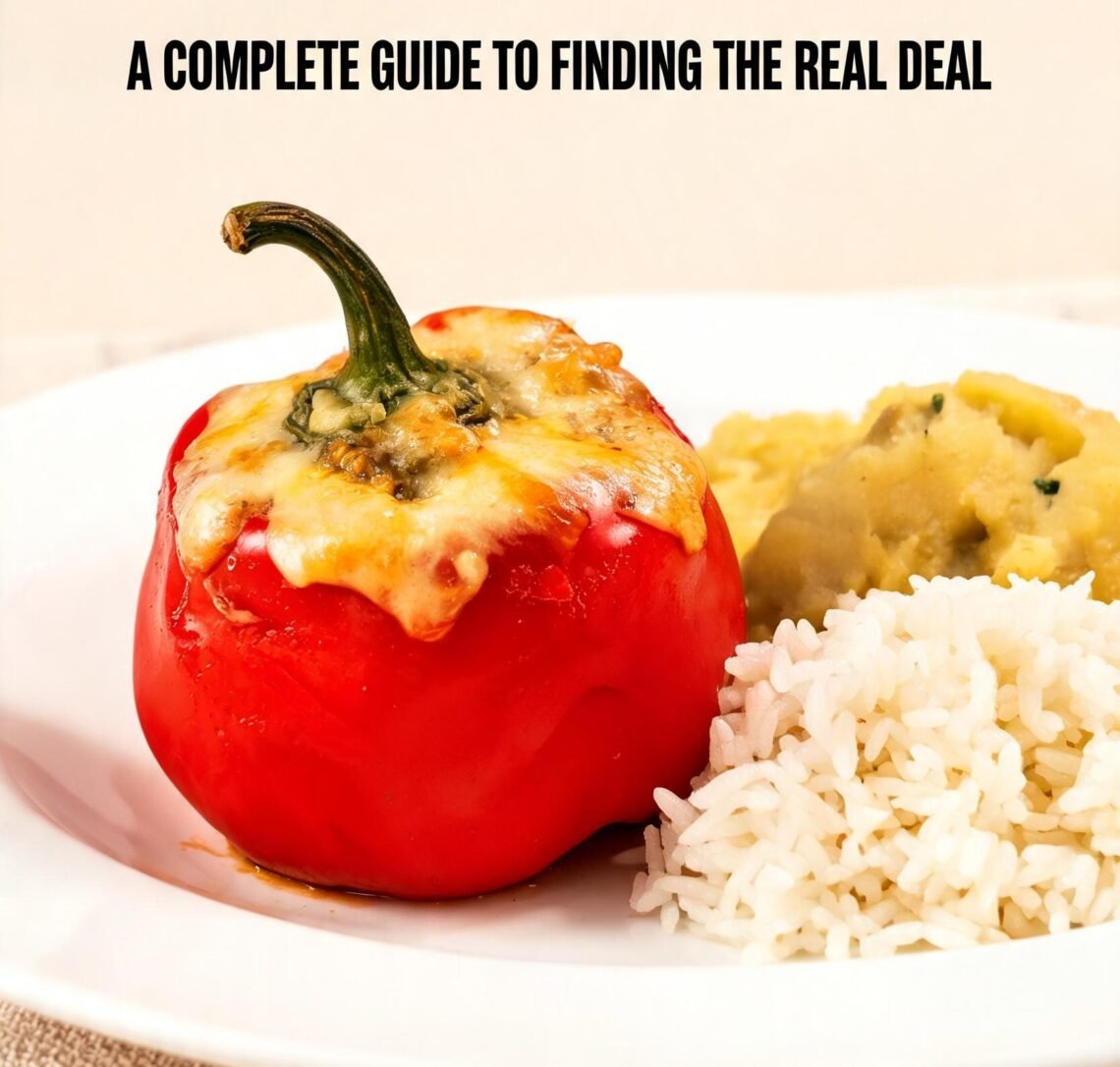
If you have ever typed “best rocoto relleno near me” into your phone, you probably already tasted this dish somewhere, or a photo online made you curious. Either way, you are in the right place. Rocoto relleno is one of Peru’s most loved dishes, and once you understand what makes a good one, you will never settle for a weak version again.
This guide will walk you through everything you need to know: what rocoto relleno actually is, where it comes from, how to find a restaurant nearby that makes it the right way, what a good plate should look and taste like, and how to avoid the common letdowns that happen when a restaurant treats this dish as just another stuffed pepper.
What Exactly Is Rocoto Relleno?
Rocoto relleno means “stuffed rocoto” in Spanish, and that name tells you almost everything. It is a round, red pepper that cooks hollow out and pack with a rich filling, usually made from seasoned ground meat, onions, garlic, and a mix of Peruvian spices. Many versions also include chopped hard-boiled egg, raisins, olives, and peanuts, which sounds like an unusual combination but actually works beautifully. Sweet, salty, and spicy notes all show up in a single bite.
After stuffing the pepper, cooks top it with cheese, most often queso fresco, and bake it until the cheese turns golden and the pepper softens just enough to hold its shape while still having a little bite. Restaurants usually serve the dish with a slice of baked potato covered in a light cheese sauce, and sometimes with a side of rice or salsa criolla, which is a tangy red onion salad.
The pepper itself is not a mild bell pepper. Rocoto peppers belong to a chili species called Capsicum pubescens, and they are naturally much hotter than jalapeños, sometimes ten times hotter or more. Good cooks know how to tame that heat during preparation, so the final dish is spicy but not unbearable. That balance between heat and flavor is really the heart of what makes rocoto relleno special.
Where Did Rocoto Relleno Come From?
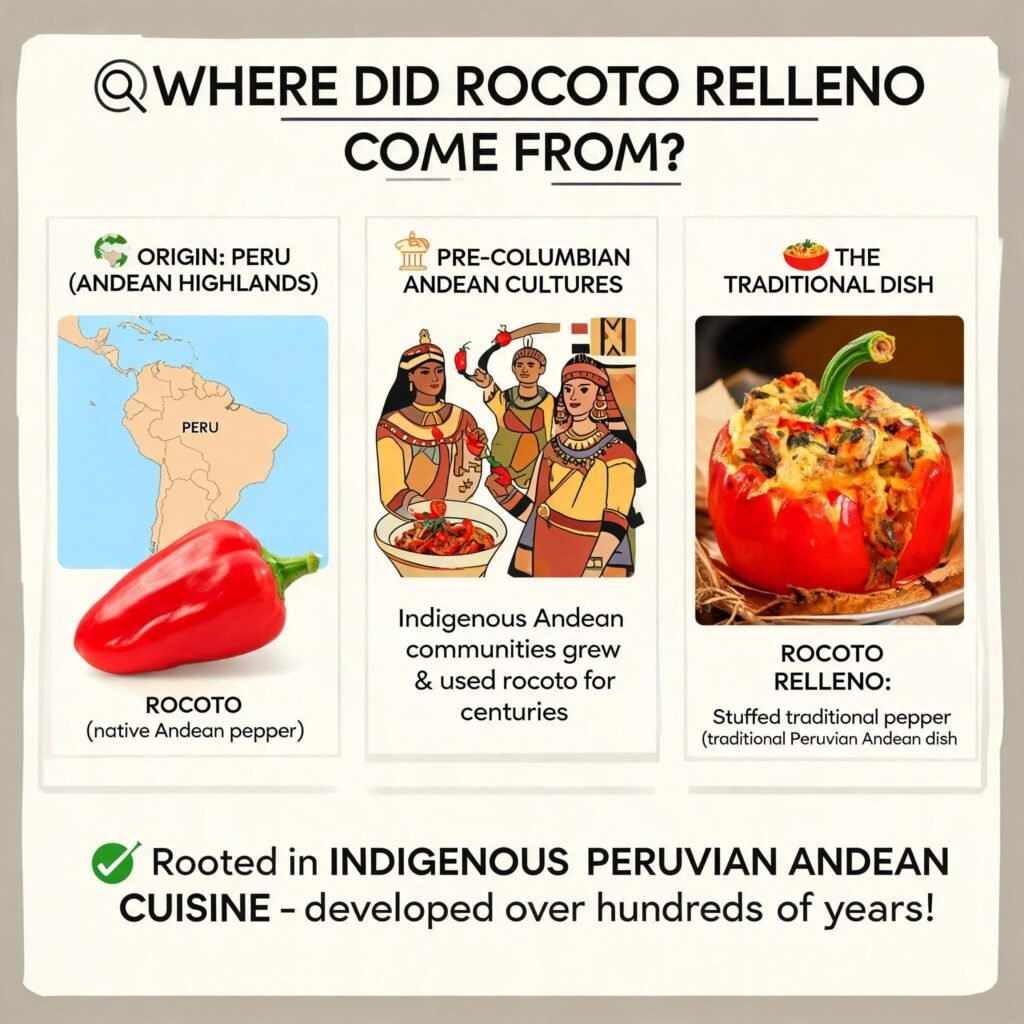
Rocoto relleno is not just a Peruvian dish in general. It is specifically tied to Arequipa, a city in southern Peru surrounded by volcanoes in the Andes mountains. Arequipa has its own distinct food culture, built around family-run restaurants called picanterías, which have been cooking traditional recipes over wood fires for generations. Rocoto relleno is one of the signature dishes that put Arequipa on the culinary map, alongside other local favorites like chupe de camarones, a shrimp chowder, and adobo, a slow-cooked pork stew.
If you ever get the chance to visit Arequipa, trying rocoto relleno there is a different experience altogether. Many local restaurants use family recipes that go back a hundred years or more, and cooks treat the dish with real pride. But since most people searching for “best rocoto relleno near me” are not currently in Peru, this guide will focus on how to track down a great version wherever you happen to be.
How to Find the Best Rocoto Relleno Near You
Finding an excellent rocoto relleno outside of Peru takes a little more effort than searching for a general “Peruvian food” restaurant, mainly because not every Latin American or fusion restaurant prepares this dish correctly. Here is how to approach the search so you land somewhere that actually knows what they are doing.
Start With Restaurants That Specialize in Peruvian Food
This might sound obvious, but it makes a bigger difference than people expect. Restaurants that call themselves Peruvian, or that focus specifically on Arequipeño cuisine, are far more likely to prepare rocoto relleno the traditional way. General Latin fusion spots sometimes offer a version of the dish, but it can end up closer to a Tex-Mex stuffed pepper than the real thing, missing the raisins, olives, or the proper spice blend that gives it character.
When you search online, try adding the word “Peruvian” or “Arequipeño” to your search instead of just “stuffed pepper” or “Latin food.” This small change usually filters out places that only have a watered-down version buried somewhere on the menu.
Read Recent Reviews Carefully
Star ratings alone do not tell the full story. Read a handful of recent written reviews and look for specific mentions of the rocoto relleno, not just general comments about the restaurant. People who genuinely enjoyed the dish tend to describe details, like the size of the pepper, how spicy it was, or how the filling tasted. If reviewers mention that the pepper tasted overcooked, mushy, or bland, that is a sign to keep looking.
It also helps to check photos that other diners have posted. A well made rocoto relleno should look full and slightly rounded, with a browned cheese top that reveals visible filling once you cut it open. If the photos show a pale, thin pepper with barely any stuffing inside, that restaurant is probably cutting corners.
Call Ahead if the Dish Is Not Listed Every Day
Because rocoto relleno takes real preparation, some smaller family-run restaurants only make it on certain days or in limited quantities. If a restaurant is known for the dish but doesn’t clearly list it on their regular menu, it doesn’t hurt to call ahead and ask. This is especially common at authentic picanterías, where dishes can rotate based on what is fresh that day.
Check if Fresh Rocoto Peppers Are Used
This detail separates a great rocoto relleno from an average one. Fresh rocoto peppers can be hard to find outside South America, so some restaurants substitute a milder pepper, like a poblano or bell pepper, and call it rocoto relleno anyway. There is nothing wrong with a restaurant being upfront about using a different pepper because of availability, but if you are chasing the real, spicy, fruity flavor of an actual rocoto, it is worth asking your server which pepper they use. Restaurants that import frozen rocoto peppers or source them from a Latin American grocery supplier usually offer a safer bet for authenticity.
What Makes a Truly Great Rocoto Relleno
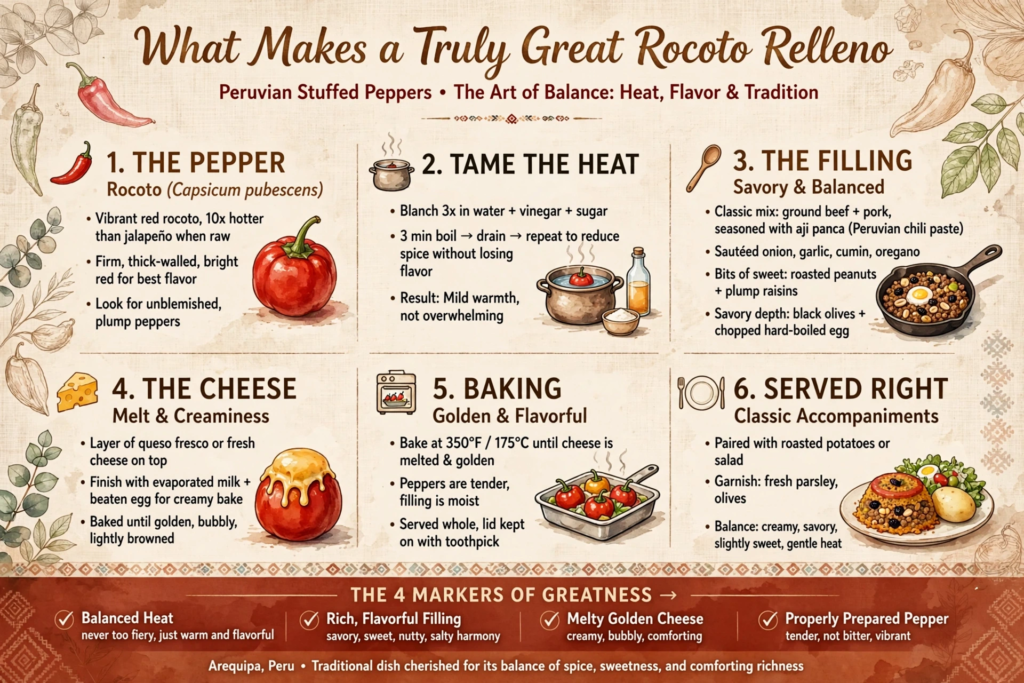
Once you sit down and the dish arrives, how do you know if it is actually good? Here is what separates a memorable plate from a forgettable one.
The Pepper Should Still Have Some Bite
A well-prepared rocoto relleno is baked just long enough for the pepper to soften without turning into mush. It should hold its round shape when you cut into it and still offer a slight resistance, almost like a well-cooked bell pepper. If the pepper collapses the moment your fork touches it, the cook likely overcooked it or boiled it too long during preparation.
The Filling Should Be Balanced, Not One-Note
The best fillings have layers of flavor. You should be able to pick out the savory meat, a touch of sweetness from raisins, a briny pop from the olives, and maybe a bit of crunch from chopped peanuts. If the filling tastes like plain seasoned ground beef with nothing else going on, the kitchen likely skipped the traditional extras that give the dish its personality.
The Heat Should Feel Intentional, Not Random
Rocoto peppers are naturally hot, but skilled cooks know how to control that heat through boiling, deseeding, and sometimes soaking the pepper before stuffing it. A great rocoto relleno should have a noticeable kick that builds gradually rather than an overwhelming burn from the first bite. If the dish barely has any spice at all, it might mean the kitchen swapped in a much milder pepper.
The Cheese Topping Should Be Golden, Not Just Melted
Most versions of rocoto relleno are topped with queso fresco or a similar cheese and finished in the oven. When done properly, the cheese develops a light golden color and a slightly crisp edge, adding another texture to the dish. A pale, barely melted layer of cheese usually means the dish didn’t spend enough time under heat, which can also mean the filling underneath didn’t warm all the way through.
It Should Come With Thoughtful Sides
While the pepper itself is the star, the sides matter too. A traditional plate often comes with a slice of baked potato in a light cheese sauce, sometimes called pastel de papa, along with rice or a simple salad. These sides are not just filler. They help balance the spice and round out the meal. If a restaurant serves rocoto relleno completely on its own with nothing else on the plate, it might be a sign they are simplifying the dish rather than preparing it the traditional way.
Common Mistakes People Make When Ordering
A lot of first-time diners order rocoto relleno expecting something closer to a mild, cheesy stuffed pepper, and end up caught off guard by the heat. If you are new to the dish, it helps to ask your server how spicy their version tends to be before ordering, since spice levels can vary quite a bit from one kitchen to another.
Another common mistake is judging a restaurant’s rocoto relleno purely by price. A higher price does not always mean better quality, and a modest, family-run spot can often outshine a fancier restaurant that treats the dish as an afterthought on a long menu. Generally speaking, prices for a good plate can range anywhere from around twelve dollars at a casual spot to closer to forty dollars at an upscale restaurant, depending on your city and the overall dining experience being offered.
Lastly, some people skip smaller, less flashy restaurants because they assume a nicer-looking place automatically means better food. In reality, some of the best versions of this dish come from unassuming family kitchens that have been making it the same way for decades. Do not judge a rocoto relleno by the restaurant’s décor alone.
Can You Make Rocoto Relleno at Home?
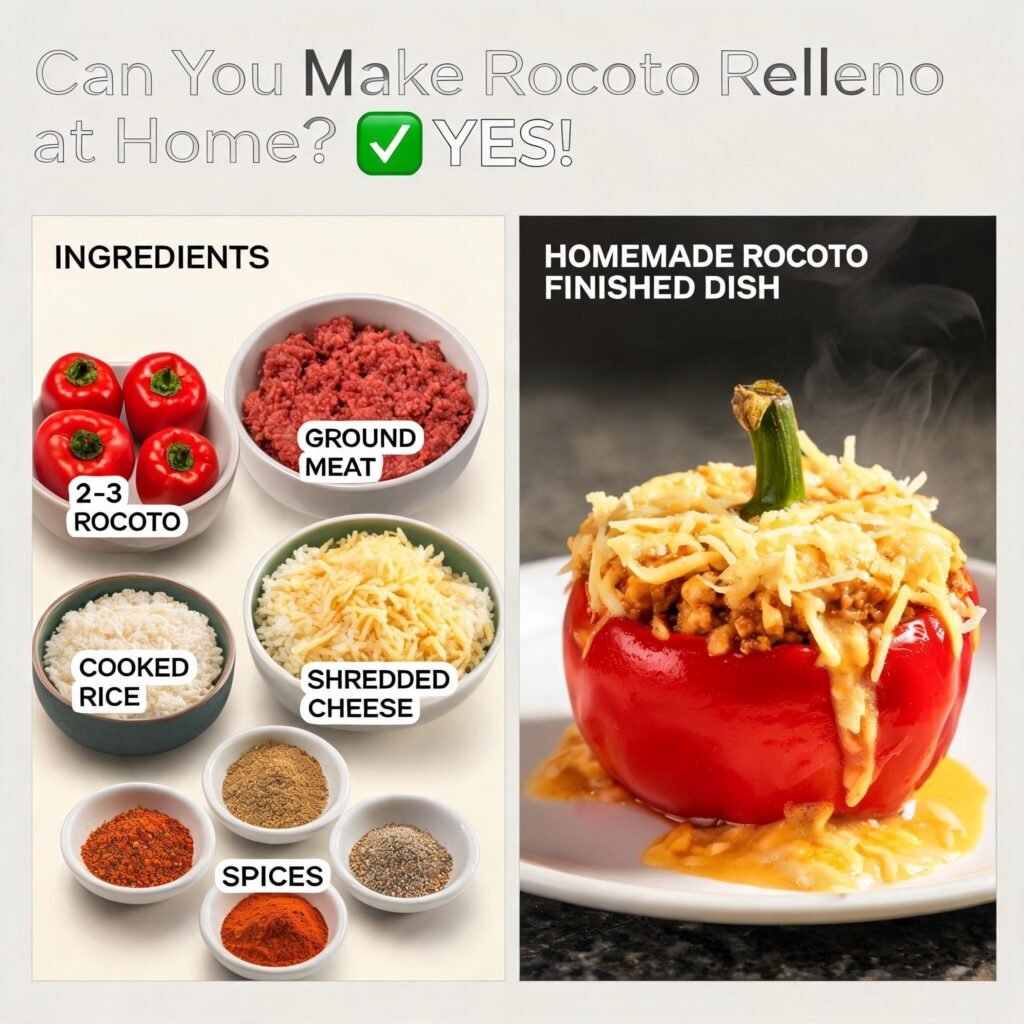
If you cannot find a restaurant nearby that does the dish justice, making it yourself is a genuinely rewarding option. The biggest challenge is usually finding fresh rocoto peppers, since they are native to the Andes and not widely sold outside South America. Some home cooks in the United States have had luck finding a close relative called the manzano pepper at Latin American grocery stores, which shares the same round shape, thick flesh, and spicy kick.
For the filling, ground beef, pork, or even bison can stand in for the alpaca meat traditionally used in Peru. The key seasonings to track down are ají panca paste, a mild red chili paste that gives the filling its signature color and depth, along with cumin and dried oregano. Rounding out the filling with chopped hard-boiled egg, raisins, olives, and peanuts gives you that same layered flavor found in the best restaurant versions. Topping the stuffed peppers with queso fresco, or a substitute like fresh mozzarella, and baking them until the cheese turns golden will get you very close to the real thing.
Making the dish at home also lets you control the heat level, which is helpful if you are cooking for people who are sensitive to spice. Boiling the deseeded peppers once or twice before stuffing them, or soaking them briefly in salted water, can noticeably tone down the intensity without losing the pepper’s fruity flavor.
Read More: Post Dig Route: The Complete Guide to This Football Route Combination
Frequently Asked Questions
What does rocoto relleno taste like? It is savory, slightly sweet, and spicy all at once. The meat filling carries most of the savory flavor, the raisins add a touch of sweetness, and the pepper itself brings a fruity heat that builds as you eat.
Is rocoto relleno always very spicy? It depends on the pepper and the preparation. Rocoto peppers are naturally hot, but a skilled cook can reduce the intensity through boiling and deseeding. Some restaurants serve a milder version, while others keep the full heat intact, so it is always worth asking before you order.
What is the difference between rocoto relleno and a regular stuffed pepper? The biggest difference is the pepper itself. Rocoto relleno uses the rocoto pepper, which is much hotter and has a thicker, juicier flesh than the bell peppers used in most Western-style stuffed pepper recipes. The filling is also distinctly Peruvian, often including raisins, olives, and peanuts alongside the meat.
Can I find a vegetarian version of rocoto relleno? Traditional recipes are meat-based, but some restaurants and home cooks offer a vegetarian filling using ingredients like mushrooms, quinoa, or beans in place of the ground meat. It is becoming more common, though you may need to ask specifically since it is not always listed on the menu.
Where is rocoto relleno originally from? It comes from Arequipa, a city in southern Peru known for its distinct regional cuisine. Many of the best versions of the dish are still found there today, made using recipes that have been passed down for generations.
Final Thoughts
Rocoto relleno is one of those dishes that rewards a little extra effort in finding the right place to try it. A weak version can leave you wondering what all the fuss is about, while a properly made one, with a tender pepper, a rich layered filling, and a golden cheese top, shows exactly why this dish has such a strong following. Whether you track down an authentic Peruvian restaurant near you or decide to try making it yourself at home, keep the details in mind: fresh rocoto or manzano peppers, a well-balanced filling, and heat that feels intentional rather than accidental. Once you find a place that gets it right, you will understand why so many people go out of their way searching for the best rocoto relleno near them.