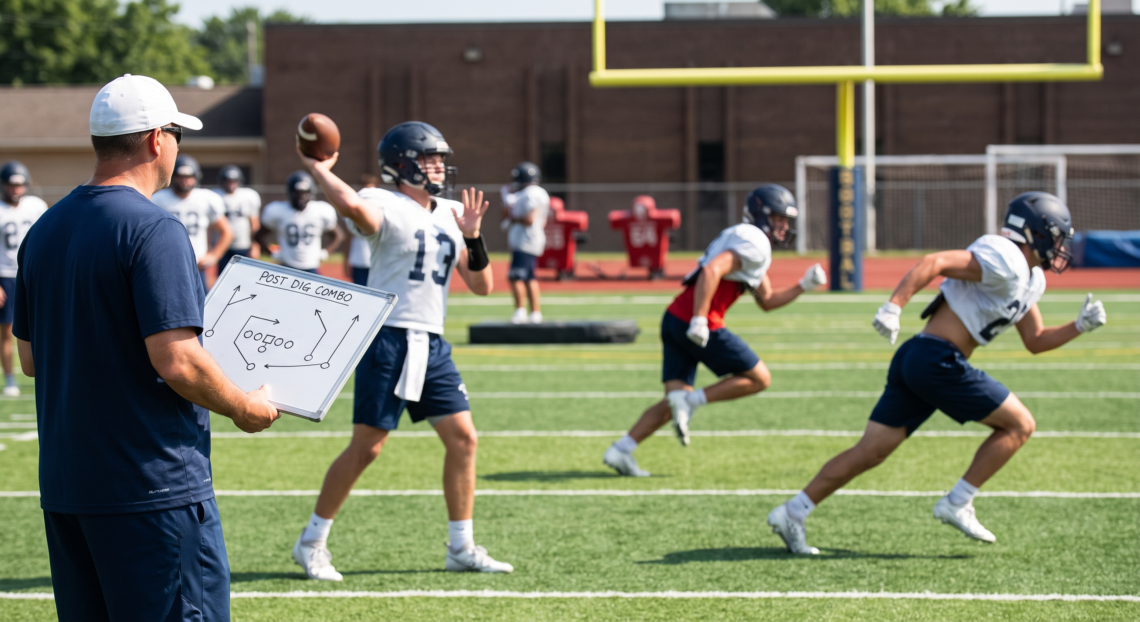
If you have watched a football game and heard an announcer say “that was a great post-dig read,” you might have wondered what that actually means. The post dig route is not one single route. It is a combination of two routes, the post and the dig, run together to attack a defense from two different angles at the same time. Once you understand how it works, you will start noticing it in almost every football game you watch, from Friday night high school games to Sunday afternoon NFL matchups.
This guide breaks down what a post route is, what a dig route is, and how the two come together to form one of the most effective passing concepts in football. We will also look at why coaches love this combination, how quarterbacks read it, and what makes it so hard for a defense to stop.
What Is a Route Tree, and Where Do These Routes Fit?
Before getting into the post dig route itself, it helps to understand the bigger picture. In football, wide receivers run a set of routes that make up what coaches call the route tree. This is a system that numbers routes from short to deep, giving quarterbacks and receivers a shared language on the field. A slant route might be a “1,” a curl might be a “2,” and so on, though the exact numbers can change from team to team.
Two of the most important routes in this system are the post route and the dig route, and both live in the intermediate-to-deep part of the route tree. They are not routes a young receiver learns on day one, but once a player has the basics down, these two patterns become some of the most valuable tools in an offense.
What Is a Post Route?
A post route is a deep route where the receiver runs straight downfield, then breaks at a 45-degree angle toward the middle of the field, aiming for the area near the goal posts. That is actually where the name comes from. The receiver’s vertical stem, meaning the straight line he runs before the break, is usually somewhere between 10 and 15 yards. From there, he angles hard toward the middle of the field and keeps going deep.
The post route is dangerous because it attacks the space between the safeties. If a defense has two deep safeties splitting the field, a well-run post route tries to split the difference between them, or bend just enough to find the soft spot behind the linebackers and in front of the safeties. Against man coverage, a good post route can simply outrun a defender who gets caught leaning the wrong way at the break point.
What Is a Dig Route?
A dig route, sometimes called a square-in, is an intermediate route where the receiver runs downfield on a vertical stem and then breaks sharply across the middle of the field at a 90-degree angle. This usually happens around 12 to 15 yards downfield. Unlike the post, which continues moving toward the end zone after the break, the dig route flattens out and travels horizontally across the field.
The dig route is built to attack zone coverage. Linebackers and safeties who are dropping into their zones have to decide how deep to sit, and a receiver breaking hard across the middle at the right depth can find a window right between them. Against man coverage, the sharp, physical break of the dig route is also useful because it forces the defender to change direction quickly, which can create separation.
Putting Them Together: The Post Dig Combination

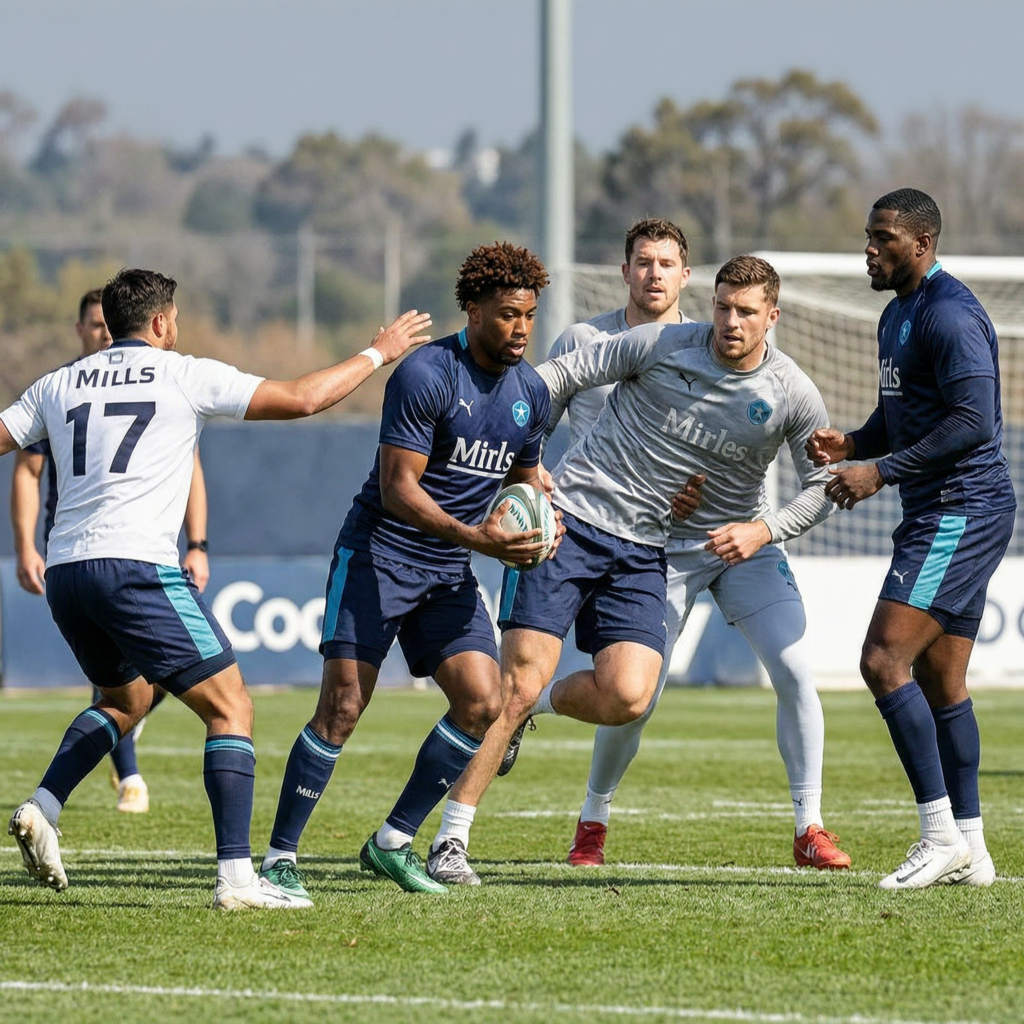
Now here is where it gets interesting. When an offense sends one receiver on a post route and another receiver on a dig route at the same time, usually stacked or spaced out on the same side of the field, it creates what is often called a post-dig combination, or sometimes referred to by its more well-known name, the Mills concept.
The idea behind this pairing is simple but effective. The post route stretches the defense vertically, pulling a deep safety further downfield and toward the middle. The dig route works underneath that safety, sitting in the space the post route just cleared out. This creates what coaches call a high-low read for the quarterback. If the safety stays deep to help against the post, the dig route will be open underneath. If the safety jumps the dig route, the post route should be open behind him.
This is what makes the post dig route combination so tough to defend. A single defender, usually a deep safety, cannot be in two places at once. He has to pick one route to take away, and whichever one he leaves alone becomes the quarterback’s answer.
Why the Mills Concept Works So Well Against Man Coverage
While the post dig combination is often talked about as a way to beat zone coverage, it is just as effective against man-to-man defense, especially when the defense is playing with a single deep safety. In this situation, the post route becomes the primary target because it threatens to run right past the safety if he commits too early to help elsewhere.
A common variation many teams use is called a dino stem, where the receiver running the post route angles slightly toward the sideline before cutting back inside toward the post. This subtle move is designed to hold the single high safety in place for a split second longer, buying just enough time and space for the post route to break open behind him. When this timing works out, it often leads to a big gain because the receiver is running away from coverage with the safety trailing behind.
A Real World Look at the Concept
This combination shows up at every level of football, from college offenses to the NFL. A common setup includes three routes working together: a receiver running the post, another running the dig, and a third receiver underneath running a shallow crossing route. This gives the quarterback three options stacked from deep to shallow. He can read the play from the post, down to the dig, and finally to the shallow crosser if neither deeper route is open.
Coaches also like to run mirrored versions of this play, where both sides of the field run a similar combination at the same time. This forces the defense to declare its coverage look and gives the quarterback a built-in answer no matter which side the defense rolls its help toward. If the defense shows one coverage before the snap and then shifts into something else, the quarterback simply works to the side that gives him the better matchup.
How Quarterbacks Read the Post Dig Route
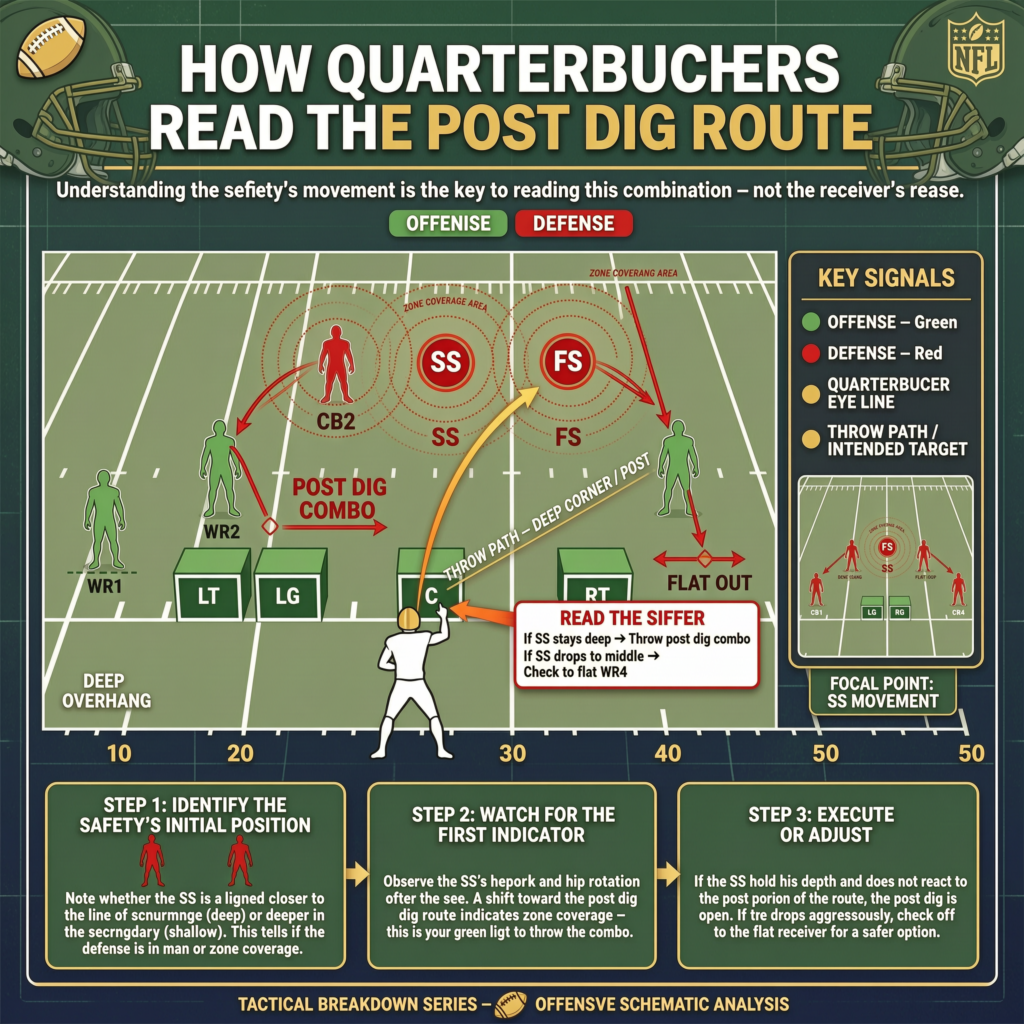
Reading a post dig combination is not about staring down one receiver and hoping he gets open. It is about watching the safety, or safeties, and letting their movement tell the story. As the play develops, the quarterback’s eyes go to the deep defender responsible for that area of the field. If that defender starts to widen or drop with the post route, the quarterback knows the window for the dig route is opening up underneath. If the defender instead breaks down to jump the dig route, the quarterback knows to trust the post route behind him.
This kind of read takes practice, timing, and trust between the quarterback and his receivers. The quarterback often has to throw the ball before the receiver fully separates from his defender, especially on the dig route, because waiting until the receiver is wide open may close the throwing window.
Why Coaches Love This Combination
There are a few reasons the post dig route shows up so often in game plans at every level of football. First, it puts real pressure on a defense’s deep coverage, whether that defense is playing with one deep safety or two. Second, it gives the quarterback a clear, logical read instead of forcing him to guess. Third, it works against a wide range of coverages, which means an offense does not have to guess what the defense will show before calling the play.
It also rewards receivers who understand timing and spacing, not just raw speed. A dig route run at the wrong depth, or a post route that breaks too early or too late, can throw off the entire concept. That is why teams spend so much practice time drilling this specific route pairing until the timing becomes second nature.
Tips for Receivers Running the Post or Dig Route
For a receiver, running either half of this combination well comes down to a few basic habits. The stem, or the straight line run before the break, needs to look the same regardless of which route is coming. If a defender can tell from the stem alone whether the receiver is about to break to a post or a dig, the whole concept loses its power. Selling the route with the eyes, the shoulders, and the pace of the stem keeps the defender guessing.
The break itself also needs to be sharp and decisive. A rounded, lazy break gives a defender extra time to recover, while a sharp, controlled break creates the separation the quarterback needs to make the throw on time. Depth matters too. Running the dig or post a few yards short or long of its intended spot can disrupt the entire timing of the play, even when the route itself looks fine.
Final Thoughts on the Post Dig Route
The post dig route is a great example of how football routes work better as a team than as individuals. On their own, a post route and a dig route are both solid, useful patterns. Paired together, they become a concept that stresses a defense’s deep coverage and gives a quarterback a clear answer no matter how the defense reacts. Whether you are a player trying to understand your assignment, a coach building a game plan, or a fan trying to follow along with the broadcast, understanding how the post and dig routes work together gives you a much deeper appreciation for what is happening on the field during a passing play.
Read More: Do a Barrel Roll: What It Means, How the Google Easter Egg Works, and Where It Came From
Frequently Asked Questions
What is a post dig route in football? A post dig route refers to a route combination where one receiver runs a post route, breaking deep toward the middle of the field, while another receiver runs a dig route, breaking sharply across the middle at a shallower depth. Together, they create a high-low read for the quarterback against a deep defender.
Is the post dig route the same as the Mills concept? Yes, in most cases. The Mills concept is the more common name coaches use for this post and dig combination, often paired with a third, shallower route to give the quarterback a full progression from deep to short.
What coverage is the post dig route designed to beat? This combination is effective against both zone and man coverage. Against zone, it creates a high-low conflict for a safety or linebacker. Against man coverage, especially single-high looks, the post route threatens to beat the deep safety while the dig route offers a quicker, underneath option.
How deep should a dig route be run? The receiver typically runs the dig route for about 12 to 15 yards before breaking across the field. This depth places the receiver in the window between underneath zone defenders and deeper safeties.
Why do quarterbacks like this combination? Because it gives them a clear read based on what the deep safety does. Instead of guessing which receiver will be open, the quarterback can watch the safety’s movement and know which route to throw based on how the defense reacts.

