Introduction
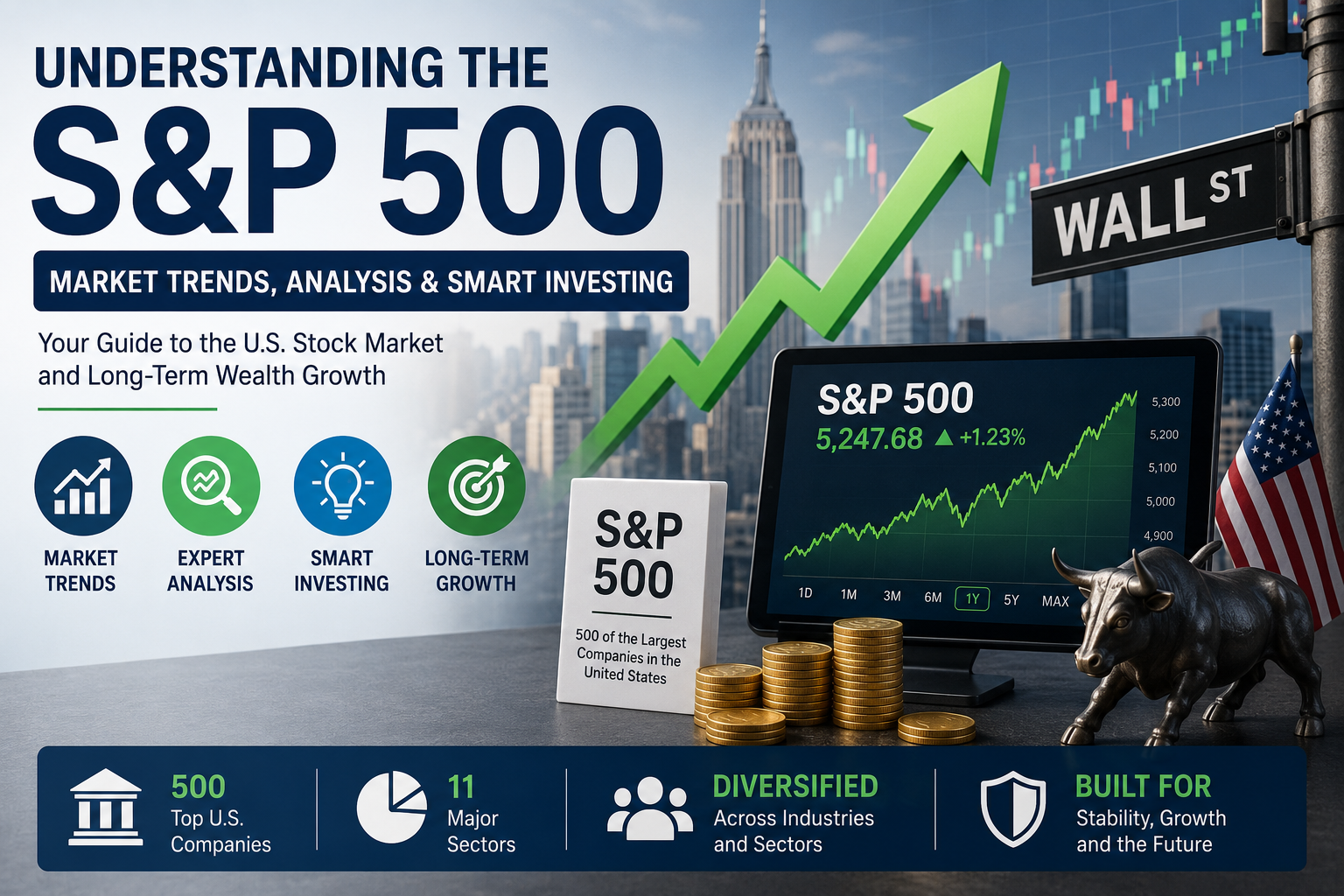
The S&P 500 is one of the most important stock market indexes in the world. It represents 500 of the largest publicly traded companies in the United States and is widely used by investors to understand the overall performance of the U.S. stock market. Whether you are a beginner or an experienced investor, keeping track of the S&P 500 can help you make informed investment decisions.
Many people search for FintechZoom.com SP500 because they want easy access to market updates, stock analysis, financial news, and investment insights. Financial websites often simplify complex market information, making it easier for readers to understand daily market movements, company performance, and economic trends.
In this guide, you’ll learn what the S&P 500 is, why investors follow it closely, how financial analysis platforms help track the market, the major factors affecting index performance, and practical strategies for long-term investing.
What Is the S&P 500?
The S&P 500, short for the Standard & Poor’s 500 Index, measures the performance of 500 leading companies listed on U.S. stock exchanges. Instead of focusing on a single business, the index gives investors a broader picture of the American economy.
The companies included in the S&P 500 come from many industries, including technology, healthcare, banking, energy, consumer goods, industrial manufacturing, communication services, and real estate. This broad diversification makes the index one of the most trusted benchmarks in global investing.
When investors say “the market is up” or “the market is down,” they are often referring to the movement of the S&P 500.
Why Is the S&P 500 So Important?
The S&P 500 has earned its reputation because it represents a significant portion of the total value of the U.S. stock market. Since the companies included are among the largest in America, their combined performance reflects the health of the economy.
Investors use the index to compare their portfolio performance, monitor market sentiment, evaluate economic conditions, and identify long-term investment opportunities.
Professional fund managers, retirement planners, financial advisors, and individual investors all rely on the S&P 500 as one of their primary benchmarks.
Understanding FintechZoom.com SP500
When people search for FintechZoom.com SP500, they are generally looking for market information, investment analysis, stock performance updates, and financial news related to the S&P 500.
Financial news platforms usually present market information in a simple format, allowing readers to understand what’s happening without reading lengthy financial reports.
Common topics include:
- Daily market performance
- Economic news
- Earnings reports
- Inflation updates
- Federal Reserve announcements
- Company performance
- Market forecasts
- Investment education
Instead of checking multiple sources, investors often prefer platforms that combine market news, expert commentary, charts, and educational content in one place.
How the S&P 500 Is Calculated
Unlike some stock indexes that treat every company equally, the S&P 500 uses market capitalization weighting.
This means larger companies have a greater impact on the movement of the index than smaller companies. If one of the biggest companies experiences a significant price increase or decline, the overall index will move accordingly.
Market capitalization is calculated by multiplying a company’s share price by the total number of outstanding shares.
Because of this weighting system, major corporations can strongly influence the daily performance of the index.
Companies That Influence the S&P 500
Some of the world’s biggest businesses are included in the S&P 500. Technology companies often represent a large percentage of the index because of their enormous market values.
Well-known companies in the index include Apple, Microsoft, NVIDIA, Amazon, Alphabet, Meta Platforms, Berkshire Hathaway, Tesla, JPMorgan Chase, and ExxonMobil.
These businesses operate across different industries, helping create a balanced representation of the American economy.
Whenever these major companies release earnings reports or announce new products, the entire market often reacts.
Factors That Affect the S&P 500
The stock market never moves randomly. Several important factors influence the direction of the S&P 500.
Economic Growth
When the economy expands, businesses generally earn higher profits. Investors become more confident, leading to rising stock prices.
During periods of slower economic growth, uncertainty may reduce investor confidence, causing market declines.
Inflation
Inflation measures how quickly prices rise across the economy.
Moderate inflation is considered healthy, but rapidly increasing prices can reduce company profits and consumer spending. Investors closely monitor inflation reports because they often influence future market performance.
Interest Rates
Interest rates set by the Federal Reserve have a major impact on stock prices.
Higher interest rates increase borrowing costs for businesses and consumers, which may slow economic growth.
Lower interest rates often encourage investment, business expansion, and consumer spending.
Corporate Earnings
Every quarter, companies publish financial reports showing revenue, profit, expenses, and future expectations.
Strong earnings generally support higher stock prices, while disappointing results can trigger market declines.
Global Events
International conflicts, natural disasters, supply chain disruptions, and political uncertainty can all affect investor confidence.
Since many S&P 500 companies operate globally, worldwide events frequently influence their financial performance.
Benefits of Following the S&P 500
Investors monitor the S&P 500 because it provides valuable information about overall market conditions.
Instead of analyzing hundreds of individual stocks every day, watching the index offers a quick understanding of whether the market is strengthening or weakening.
It also helps investors identify long-term trends rather than reacting to short-term price fluctuations.
Many retirement accounts, pension funds, and investment portfolios use the S&P 500 as a benchmark because of its consistent historical performance.
Long-Term Investing vs. Short-Term Trading
One of the biggest decisions investors face is whether to invest for the long term or actively trade the market.
Long-term investors usually focus on years or decades instead of daily price movements. They believe quality companies continue growing over time despite temporary market declines.
Short-term traders attempt to profit from daily or weekly price changes. This strategy requires more experience, research, and risk management.
For most beginners, long-term investing is generally considered the simpler and more sustainable approach.
Common Mistakes New Investors Make
Many beginners become emotional when markets rise or fall.
Buying stocks simply because prices are increasing can lead to poor decisions. Likewise, selling investments during temporary market declines may lock in unnecessary losses.
Successful investors often remain patient, continue learning, diversify their investments, and avoid making decisions based solely on headlines or social media discussions.
Building wealth usually takes time rather than quick trading success.
Why Market News Matters
Financial news plays an important role in investment decisions.
Economic reports, employment data, inflation figures, company earnings, mergers, acquisitions, and government policies can all influence stock prices.
Keeping up with reliable financial news helps investors understand why markets move instead of simply reacting to price changes.
Learning the reasons behind market movements can improve long-term investment decisions.
Investment Strategies for the S&P 500
Many investors choose strategies based on their financial goals, risk tolerance, and investment horizon.
Some invest regularly through monthly contributions, allowing them to purchase shares regardless of market conditions. This approach helps reduce the impact of short-term volatility over time.
Others prefer diversified portfolios that combine S&P 500 investments with bonds, international stocks, dividend-paying companies, and other assets.
Diversification helps reduce overall portfolio risk while providing opportunities for long-term growth.
Regardless of strategy, consistency often proves more valuable than attempting to predict every market movement.
Risks Investors Should Understand
Although the S&P 500 has delivered strong long-term returns historically, investing always involves risk.
Markets can experience corrections, recessions, and periods of uncertainty. Even the largest companies may face challenges from changing consumer demand, new competition, or economic slowdowns.
Investors should avoid expecting guaranteed profits and instead focus on building diversified portfolios that match their financial objectives.
Patience, discipline, and proper research remain essential components of successful investing.
The Future of the S&P 500
The future performance of the S&P 500 will depend on many factors, including technological innovation, economic growth, consumer spending, corporate profitability, inflation, and monetary policy.
Emerging technologies such as artificial intelligence, cloud computing, renewable energy, robotics, biotechnology, and advanced manufacturing may continue shaping the next generation of leading companies.
While short-term market movements are impossible to predict accurately, many investors remain optimistic about the long-term growth potential of innovative businesses within the index.
Final Thoughts
The search term FintechZoom.com SP500 reflects a growing interest in understanding the U.S. stock market through accessible financial news and analysis. The S&P 500 remains one of the most trusted indicators of economic performance, offering investors a broad view of how leading American companies are performing.
Whether you are just beginning your investment journey or already have market experience, understanding the factors that influence the S&P 500 can help you make better-informed decisions. By focusing on long-term goals, staying updated with reliable market information, maintaining a diversified portfolio, and avoiding emotional reactions to short-term volatility, investors can build a stronger foundation for financial success.
The stock market will always experience periods of growth and decline, but knowledge, patience, and consistent investing have historically proven to be valuable tools for navigating changing market conditions. As financial technology continues to evolve, access to market information is becoming easier than ever, allowing investors to stay informed and make smarter decisions in an increasingly dynamic financial world.
Frequently Asked Questions
What does FintechZoom.com SP500 refer to?
It generally refers to information, news, analysis, and educational content related to the S&P 500 that readers search for online when looking for market updates and investment insights.
Is the S&P 500 good for beginners?
Yes. Many beginners choose investments that track the S&P 500 because it provides exposure to hundreds of large companies through a single investment, helping reduce the risk associated with owning individual stocks.
Why does the S&P 500 move every day?
The index changes throughout the trading day because the share prices of its 500 constituent companies rise and fall based on investor activity, earnings reports, economic news, and global events.
Can the S&P 500 predict the economy?
Not exactly. While it is considered a strong indicator of investor confidence and economic expectations, it cannot predict future economic conditions with certainty.
Why do investors monitor the S&P 500?
Investors follow the index to understand overall market performance, compare investment returns, identify long-term trends, and make more informed financial decisions.